
Stretch is one of the first things brands notice when choosing an activewear fabric. But more stretch does not automatically mean better performance.
A fabric can stretch a long way and still recover poorly. Another fabric may feel firmer but provide better support and hold its shape more consistently during wear.
The right amount of stretch depends on the product, the fit and what the garment needs to do on the body.
Stretch and Recovery Are Not the Same Thing
When evaluating activewear fabric, it is important to separate stretch from recovery.
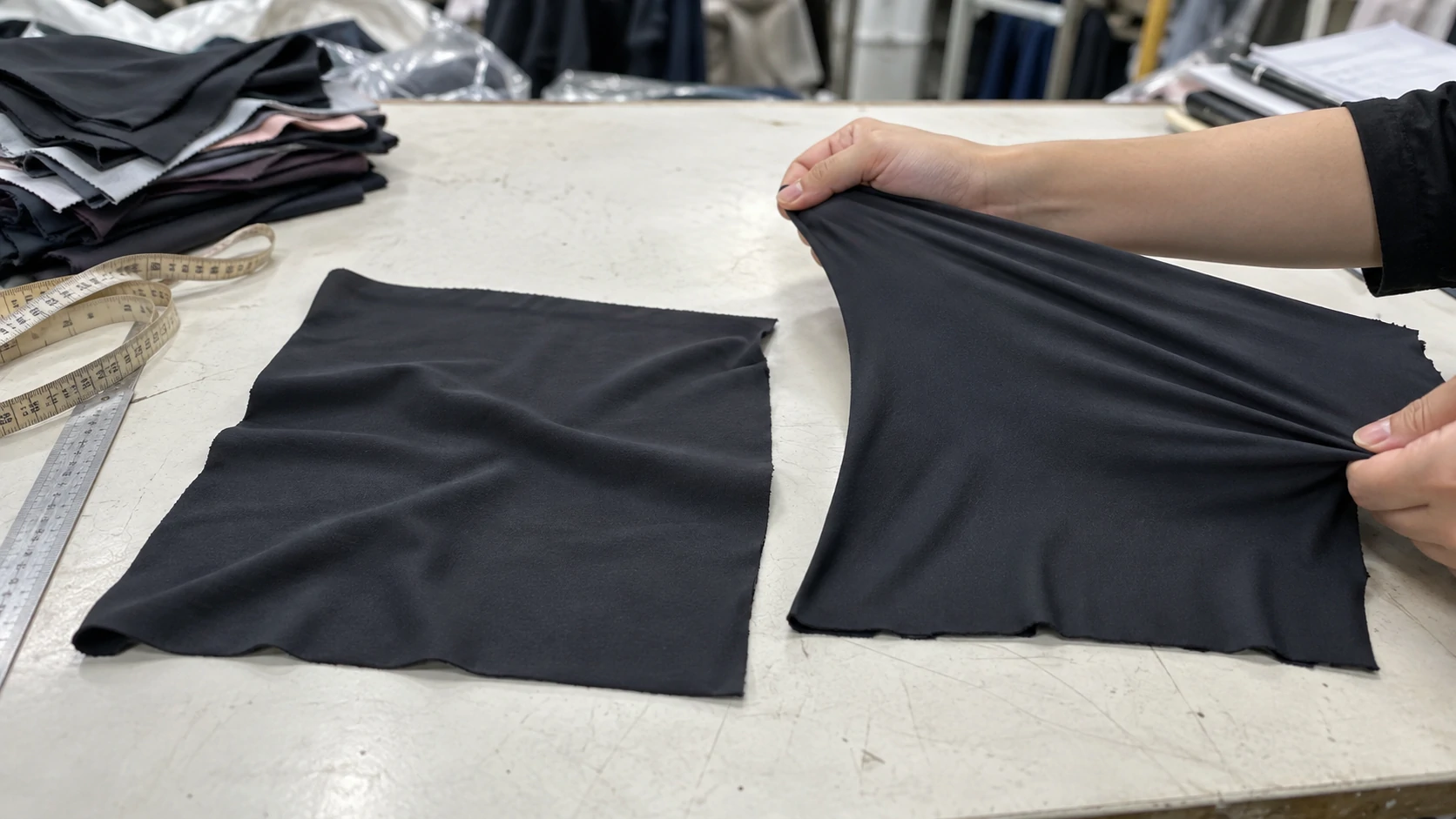
Stretch describes how far the fabric can extend from its original dimensions.
Recovery describes how well the fabric returns to its original shape after that tension is released.
This difference matters because a fabric may feel highly elastic during a hand test but still become loose after repeated movement.
For activewear, the question is not simply:
“How far can this fabric stretch?”
It is also:
“What happens after it stretches again and again?”
Poor recovery can contribute to problems such as:
- knees becoming baggy
- waistbands feeling looser during wear
- areas around the seat losing shape
- inconsistent compression
- garments fitting differently after repeated use
That is why stretch percentage alone does not tell the whole story.
Different Activewear Products Need Different Stretch Behavior
There is no single stretch level that works for every activewear product.
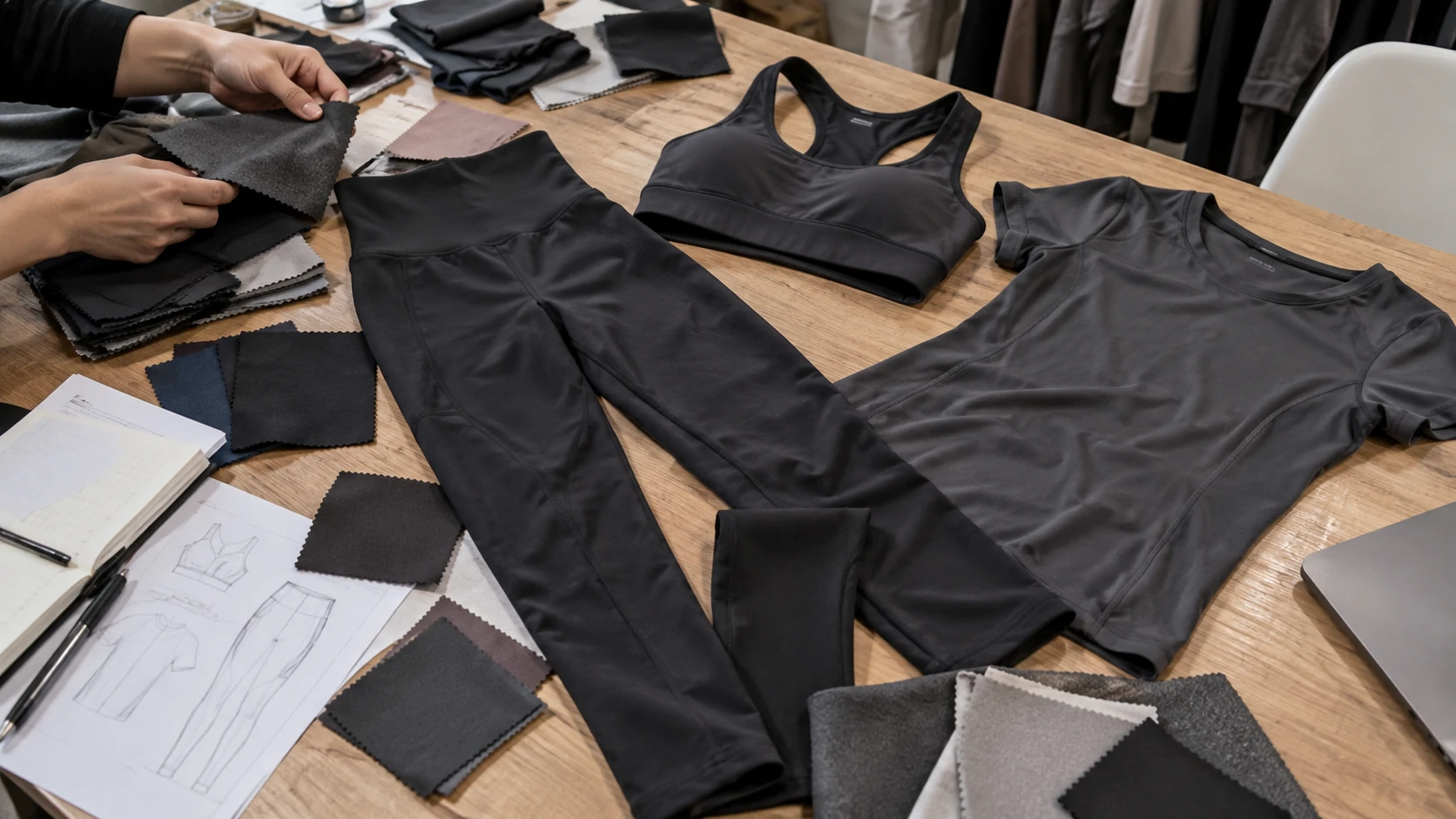
A legging, sports bra and training top interact with the body differently, so the fabric needs to support different movements and fit requirements.
Leggings
Leggings usually need enough stretch to move through the hip, thigh and knee while still recovering after repeated bending and extension.
If the fabric stretches easily but does not recover well, the garment may gradually lose its intended shape.
If the fabric is too resistant, the same pattern may feel tighter than expected and restrict movement.
The goal is therefore not maximum stretch. It is a balance between mobility, coverage, support and recovery.
Sports Bras
Sports bras often require more controlled stretch.
The fabric needs enough elasticity to allow the garment to be put on and move with the body, but excessive stretch can reduce the feeling of support.
Fabric behavior also needs to be considered together with:
- garment construction
- elastic width and tension
- strap design
- neckline and armhole shape
- intended support level
This is why selecting fabric for a sports bra cannot be based on stretch alone.
Training Tops
Training tops may need a different balance again.
A fitted compression-style top usually depends more heavily on stretch and recovery, while a looser training top may rely less on fabric elasticity.
The intended silhouette should therefore be confirmed before the fabric is finalized.
Stretch Direction Matters
The amount of stretch is only one part of the evaluation.
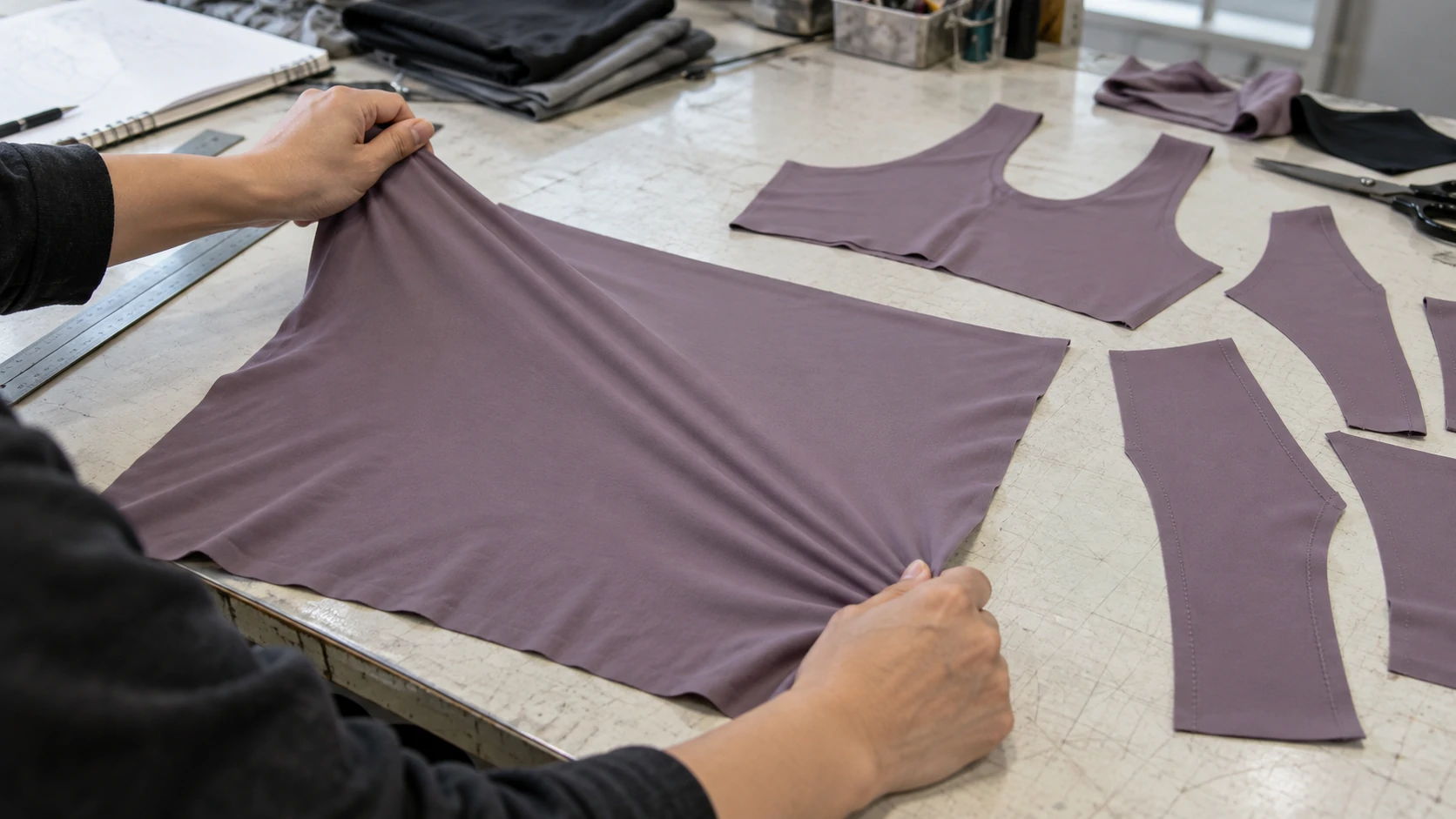
The direction in which the fabric stretches also affects how the garment behaves.
Some fabrics stretch significantly across the width but much less in the length direction. Others provide substantial stretch in both directions.
This can influence:
- movement around the hip and knee
- waistband behavior
- garment length during wear
- pattern placement
- how tightly the garment follows the body
A fabric may therefore appear suitable when tested in one direction but behave very differently once it is cut into a garment.
This is especially important when comparing two fabrics that look and feel similar.
Why Can the Same Pattern Fit Differently in Another Fabric?
A pattern is developed around certain material behavior.
If the fabric changes, the effective fit can change even when the pattern dimensions remain exactly the same.
For example, replacing a firm fabric with a softer and more extensible fabric may make the garment feel looser.
Changing to a fabric with less stretch or stronger resistance may make the same garment feel tighter.
Fabric weight, structure and recovery can also change how the garment sits on the body.
This is one reason a fabric substitution should not automatically be treated as a simple material change.
The sample should be reviewed again with the new fabric.
More Stretch Does Not Automatically Mean More Comfort
It is easy to assume that a fabric with more stretch will always feel more comfortable.
In practice, comfort depends on several factors working together.
A highly extensible fabric with weak recovery may feel soft initially but provide little stability.
A firmer fabric may stretch less but distribute pressure more consistently across the garment.
The pattern also affects the result. A fabric that works well with one fit may feel completely different when used with another.
Instead of looking for the fabric with the highest stretch, brands should consider whether the stretch behavior matches the intended product.
How Should You Compare Activewear Fabrics?
When comparing fabric options during development, evaluate more than the initial hand feel.
| Check | What to Look For |
|---|---|
| Stretch | How far the fabric extends |
| Recovery | How well it returns after stretching |
| Direction | Where the fabric stretches most |
| Resistance | How much force is needed to stretch it |
| Coverage | Whether the fabric becomes too transparent under tension |
| Surface | Whether stretching changes the appearance |
| Repeated Movement | Whether the fabric begins to loosen after repeated extension |
These checks are more useful when considered together rather than individually.
A fabric that performs well in one area may still create problems somewhere else.
Test the Fabric in the Actual Product
A fabric test can help narrow down material options, but the final evaluation should happen in the garment.
Once the fabric is cut and sewn, pattern shape, seams, elastic and construction all begin to influence how it behaves.
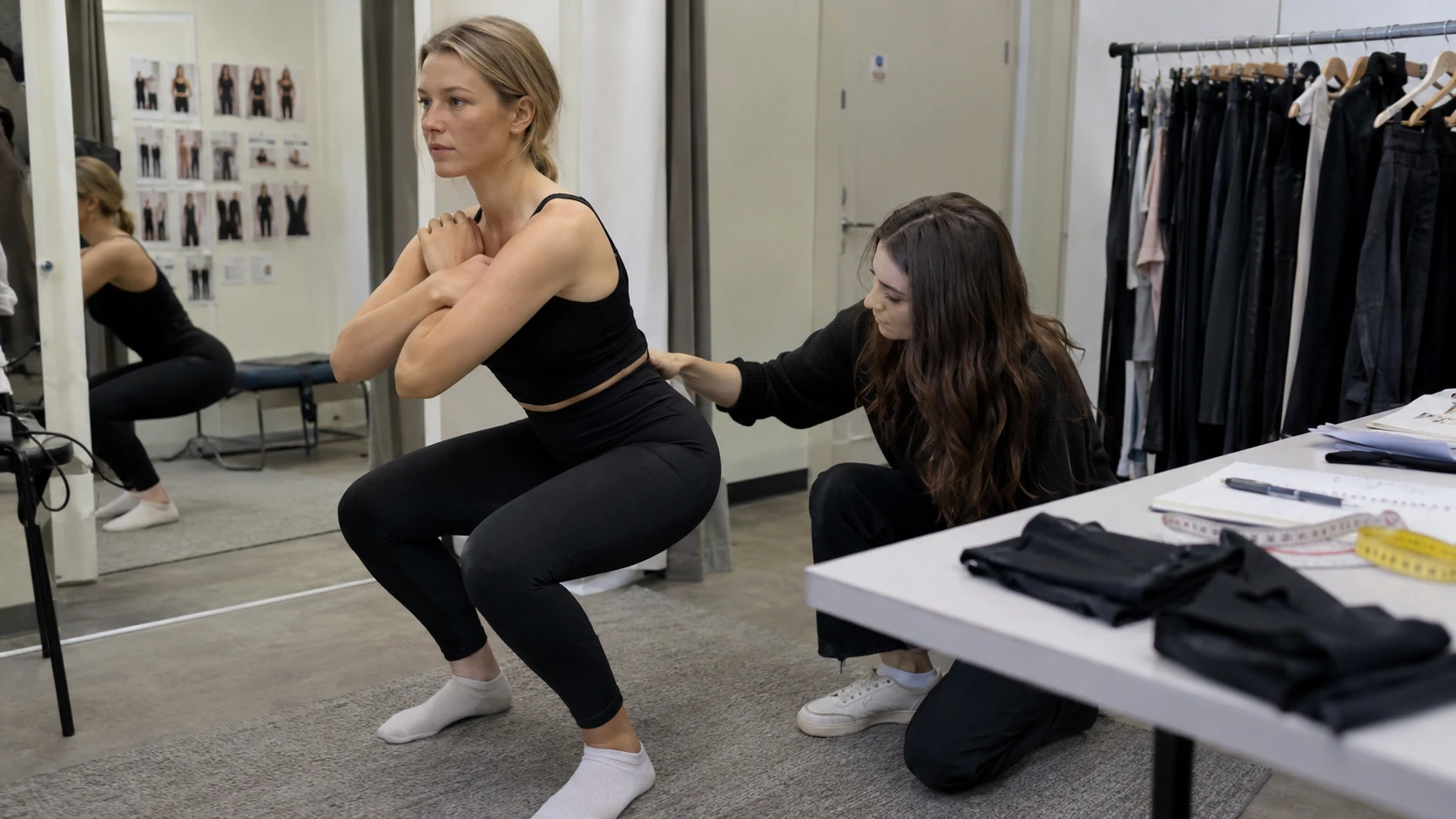
During sample review, check the garment through movements that reflect its intended use.
For leggings, this might include:
- squatting
- bending the knee
- walking
- stretching the waistband
- repeated movement through the hip and seat
For a sports bra or fitted training top, review how the garment behaves when the arms are raised, extended and rotated.
The purpose is not to create an extreme stress test.
It is to understand whether the fabric and garment continue to work together during normal movement.
What Should Be Confirmed Before Approving the Fabric?
Before approving an activewear fabric for production, confirm that it works with the actual product rather than evaluating it only as a fabric swatch.
Review:
- the intended fit
- stretch in the required directions
- recovery after repeated movement
- coverage when the fabric is under tension
- support or compression requirements
- compatibility with the pattern
- performance after sewing
- the finished sample on the body
If the fabric changes during development, the fit should be reviewed again.
Even a small change in material behavior can affect the final garment.
The Key Takeaway
Activewear does not simply need more stretch.
It needs the right stretch behavior for the product.
Stretch, recovery, resistance, direction, pattern and construction all work together to determine how the finished garment feels and performs.
A good fabric decision therefore starts with the product requirement, not with the highest stretch percentage.
Frequently Asked Questions
Is four-way stretch always better for activewear?
Not necessarily. The required stretch behavior depends on the product, fit and movement requirements. Four-way stretch can be useful for many fitted activewear products, but it should still be evaluated together with recovery, support and construction.
What is the difference between stretch and recovery?
Stretch describes how far a fabric can extend. Recovery describes how effectively it returns to its original shape after the tension is released.
Why do leggings become baggy at the knees?
Fabric recovery can be one factor. Repeated bending places the knee area under tension, and a fabric with insufficient recovery may not return completely to its original shape.
Can changing fabric change the fit without changing the pattern?
Yes. Different fabrics can have different stretch, resistance, weight and recovery characteristics, so the same pattern can feel tighter or looser when the material changes.
Should fabric be approved before making the final sample?
Fabric properties can be evaluated first, but the material should also be reviewed in the actual garment before final approval. This allows the fabric, pattern and construction to be assessed together.