
Leggings can look completely opaque on a table and still become noticeably sheer once they are worn.
For an activewear brand, this can be frustrating because the fabric may feel thick, premium and supportive during development — yet become transparent across the hips, seat or thighs when stretched on the body.
The problem is that opacity is not controlled by one specification alone.
Fabric weight, construction, stretch, color, fit and the amount of tension placed on the material all influence how much coverage a pair of leggings actually provides.
Understanding which factor is causing the problem is the first step toward fixing it.
Why Do Leggings Become Sheer When Stretched?
When a knitted activewear fabric stretches, its structure opens.
The yarns move farther apart and the material becomes thinner across the stretched area.
As more light passes through the fabric, the garment can begin to look sheer.
This is why a fabric swatch can appear perfectly opaque while relaxed but behave very differently once it is stretched across the body.
The effect is often most noticeable around:
- the seat
- the hips
- the upper thighs
- the knees during bending
- areas where the garment is particularly tight
The question therefore should not only be:
“Is this fabric opaque?”
It should also be:
“Does this fabric remain opaque at the amount of stretch required by this garment?”
Fabric Weight Matters — But GSM Is Not the Whole Answer
Fabric weight is often one of the first specifications brands look at when trying to improve coverage.
A heavier fabric can provide more material and may improve opacity.
But a higher GSM does not automatically guarantee squat-proof leggings.
Two fabrics with a similar weight can perform differently because their:
- yarn structure
- knit density
- fiber composition
- surface finish
- stretch
- recovery
may be different.
A relatively dense fabric can sometimes provide better coverage than another fabric that is technically heavier but opens more when stretched.
GSM is therefore useful, but it should not be treated as the only measurement of opacity.
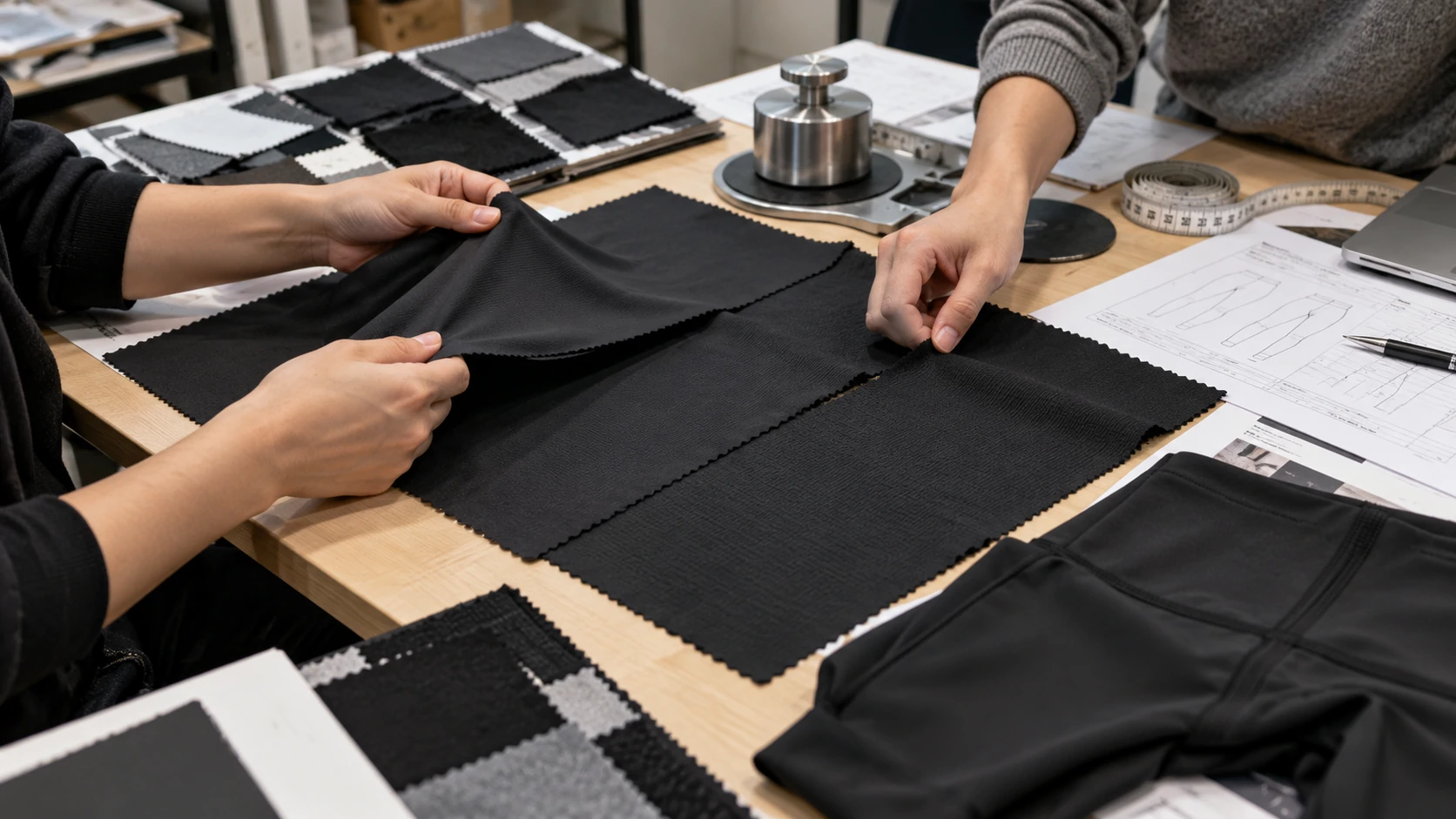
Stretch Changes Coverage
The more a fabric is stretched, the more its structure can open.
This means the same material can provide different levels of coverage depending on how much tension is placed on it.
A fabric that performs well at moderate stretch may become significantly more transparent when pushed further.
This also explains why fabric stretch and garment fit need to be evaluated together.
For a deeper explanation of stretch behavior, see how much stretch activewear really needs.
A Legging Can Be Too Tight for the Fabric
Sometimes the material itself is not the only problem.
The pattern may be placing too much tension on the fabric.
If the hip, seat or thigh area is too tight, the material has to stretch further to fit the body.
As the fabric stretches further, coverage can decrease.
This is why simply replacing the fabric with something heavier may not always solve the problem.
The development team should also check whether the garment is creating excessive tension in the areas where sheerness appears.
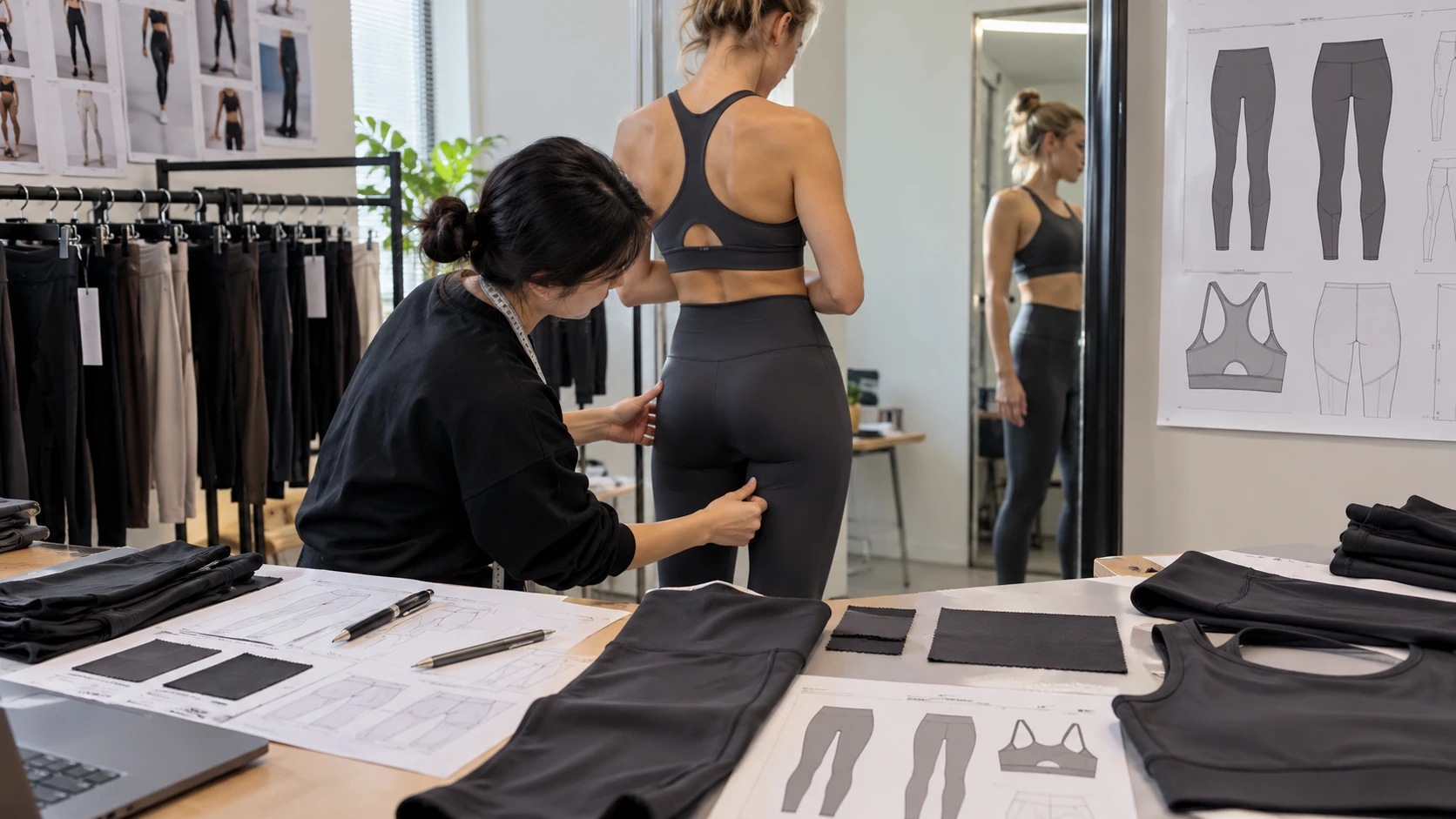
Color Can Affect Perceived Opacity
Different colors can behave differently even when the base fabric construction is similar.
Light shades can make show-through more noticeable, while certain bright or pale colors may reveal shadows and undergarments more easily.
Dark colors often appear more forgiving, but they should still be tested under stretch.
This means approving opacity in black does not automatically confirm that every color in the collection will perform the same way.
When developing multiple colorways, coverage should be reviewed across the actual production colors.
Fabric Construction Matters
Activewear fabrics are not all knitted in the same way.
The density and structure of the knit influence how much the material opens when stretched.
A fabric with a tighter structure may maintain better visual coverage under tension.
A more open construction may allow more light through as the garment stretches.
Surface appearance can also be misleading.
A fabric may feel smooth, thick and premium in the hand but still open significantly when placed under tension.
That is why hand feel alone cannot determine whether a fabric is suitable for leggings.
Why Does the Seat Area Often Become the Most Sheer?
The seat is one of the areas where leggings usually experience the greatest amount of stretch.
When the wearer bends or squats, the fabric has to extend across a larger three-dimensional area.
If the pattern is already tight through the hip and seat, that tension increases further.
This combination can make a fabric that appears opaque while standing become noticeably more transparent during movement.
It is one reason a static fitting is not enough when approving leggings.
Test Opacity Under Realistic Tension
Holding a fabric swatch up to a light can reveal some information, but it does not reproduce how the material behaves in a garment.
A more useful evaluation is to test the fabric under realistic stretch.
During development, review:
- the fabric while relaxed
- the fabric under controlled stretch
- the finished leggings while standing
- the garment while bending
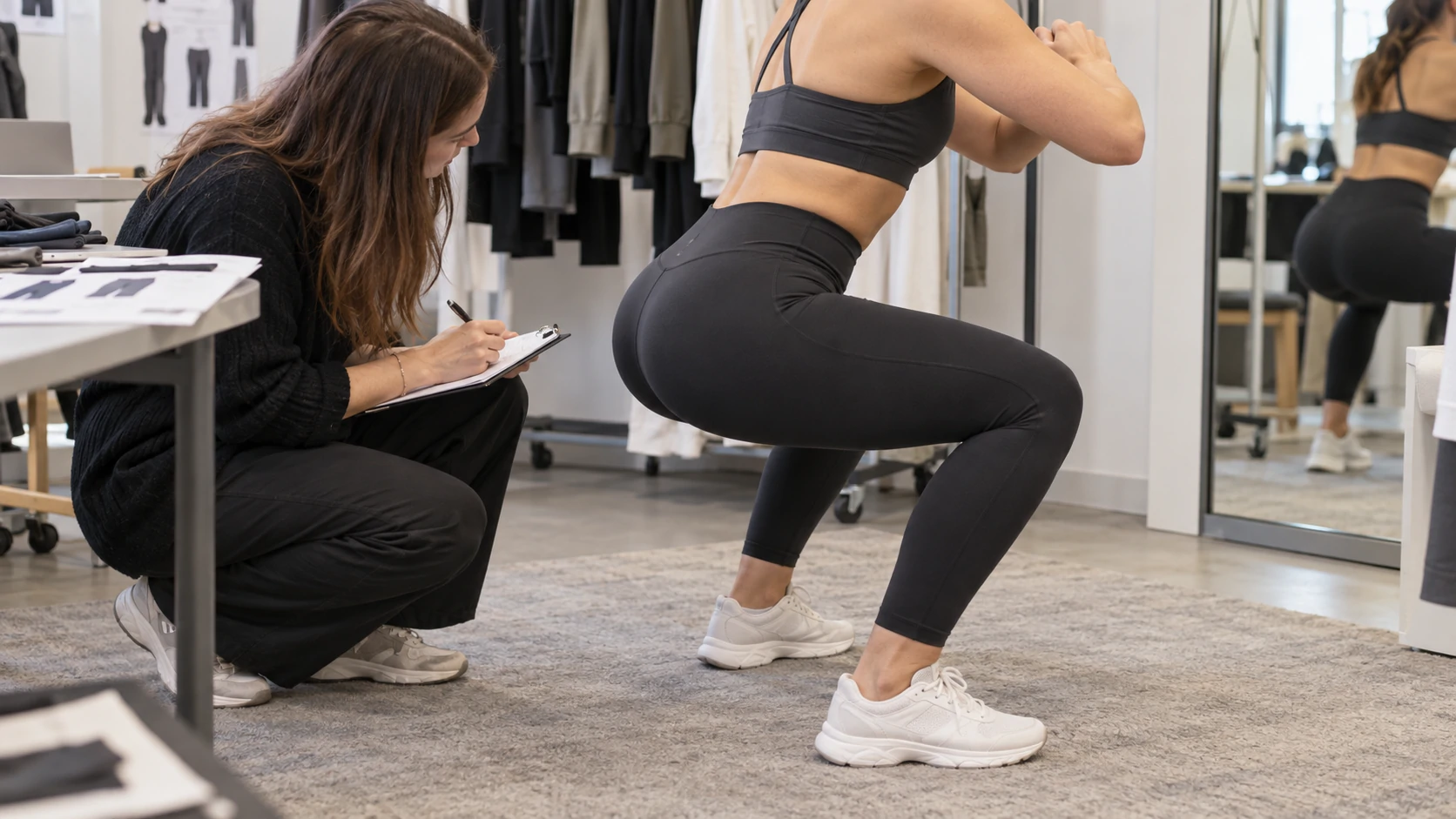
- the garment during a squat
- the seat and hip areas under movement
The goal is not to stretch the material as far as physically possible.
The goal is to reproduce the tension the fabric will actually experience when the garment is worn.
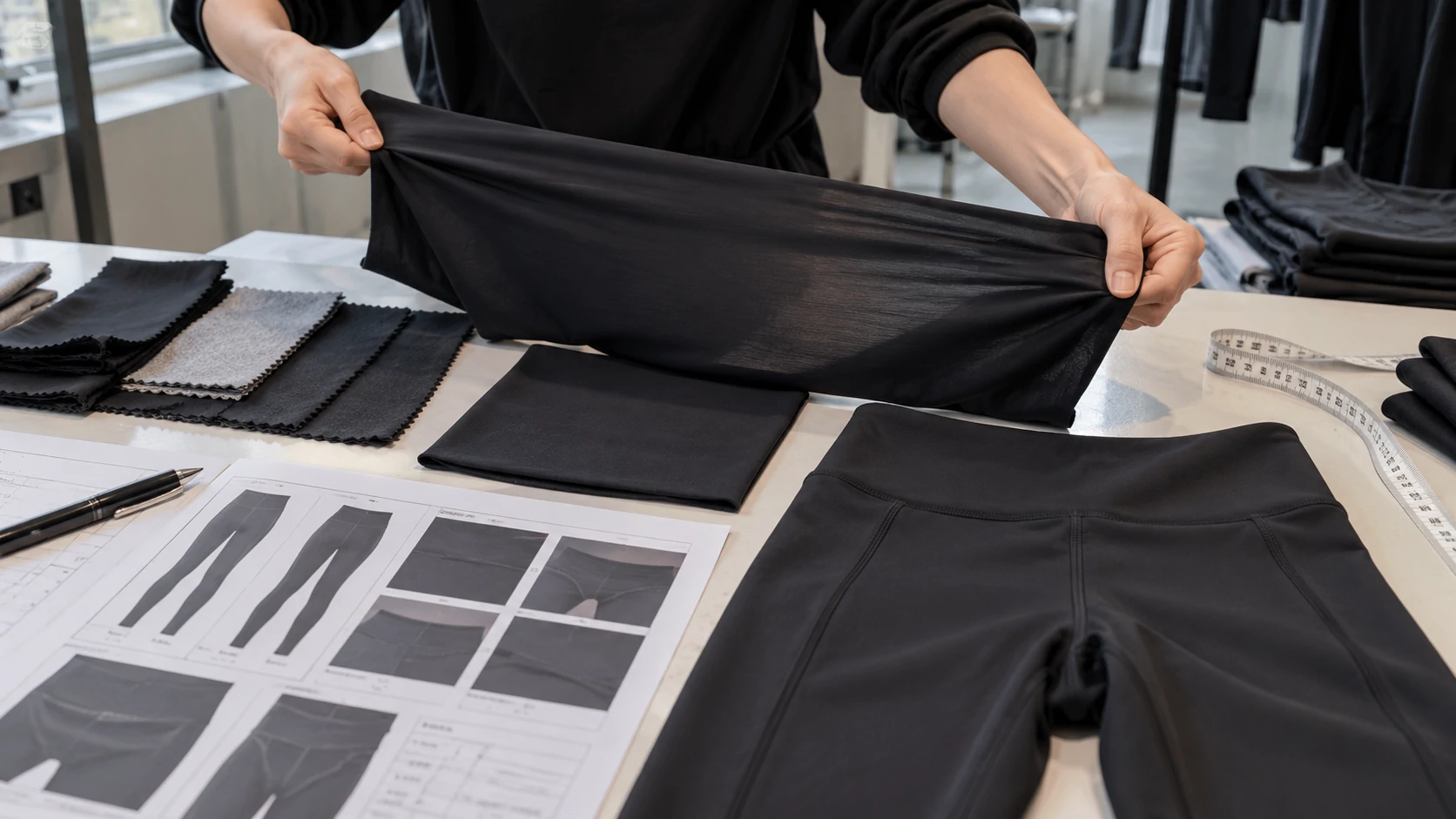
Check the Garment on the Intended Size
Opacity testing should also be connected to sizing.
If a sample intended for one body measurement is tested on a significantly larger fit model, the fabric may be placed under more tension than intended.
Likewise, a garment that looks completely opaque on a smaller body may behave differently at another size.
For this reason, fit and coverage should be reviewed together during sample development.
The question is not simply whether the fabric passes an isolated opacity test.
It is whether the fabric + pattern + size work together.
What Should You Check Before Approving Leggings?
Before approving a legging fabric and sample, review several factors together.
| Check | What to Review |
|---|---|
| Fabric Weight | Whether the weight is suitable for the intended product |
| Knit Structure | How much the fabric opens under tension |
| Stretch | How far the material needs to extend on the body |
| Recovery | Whether it returns to shape after movement |
| Fit | Whether the pattern creates excessive tension |
| Color | Whether each colorway maintains acceptable coverage |
| Standing Test | Coverage in a relaxed body position |
| Movement Test | Coverage while bending and squatting |
| Size | Whether the garment is tested on the intended body measurements |
No single check should determine approval by itself.
Should You Just Choose a Thicker Fabric?
Not necessarily.
Increasing fabric weight may improve coverage, but it can also change:
- hand feel
- breathability
- compression
- stretch
- drape
- drying performance
- overall comfort
If the real problem is excessive pattern tension, simply increasing the GSM may create a heavier garment without addressing the underlying fit issue.
A better approach is to identify whether the problem comes primarily from the fabric, fit or the interaction between both.
What If the Fabric Is Still Sheer After Changing GSM?
If increasing fabric weight does not solve the problem, review the other variables.
Check:
- how much the fabric opens under stretch
- whether the knit structure is dense enough
- whether the pattern is too tight
- whether the problem appears only in certain colors
- whether the issue occurs only during movement
- whether the correct garment size is being tested
This helps avoid repeatedly changing materials without understanding why the problem is happening.
The Key Takeaway
Sheer leggings are not always caused by fabric being “too thin.”
Opacity is the result of fabric structure, weight, stretch, color and garment fit working together.
A fabric can look completely opaque while relaxed and still lose coverage once the garment places it under tension.
That is why leggings should be evaluated as a finished product — on the intended body size and during realistic movement — before the fabric and sample are approved.
Frequently Asked Questions
Does higher GSM always make leggings squat-proof?
No. Higher fabric weight can help, but knit density, stretch, color and garment fit also affect opacity. Two fabrics with similar GSM can perform differently under tension.
Why are my leggings only sheer when I squat?
Squatting increases tension across the hip and seat area. As the fabric stretches further, its structure can open and allow more light to pass through.
Can leggings be sheer because the size is too small?
Yes. If the garment is too tight for the wearer, the fabric may be stretched beyond the level intended during development, reducing coverage.
Should every activewear color be tested for opacity?
Yes. Different colors can produce different visual results, so coverage should be reviewed in the actual colorways being developed.
Is holding fabric up to a light enough to test opacity?
It can be a quick preliminary check, but it does not reproduce the tension created when leggings are worn. The finished garment should also be evaluated on the body and during movement.