
A leggings waistband can look perfectly stable while standing and still start rolling, folding or sliding once the wearer begins to move.
For activewear brands, this is more than a comfort issue.
A waistband that repeatedly rolls down can make the entire garment feel poorly fitted — even when the fabric, stitching and overall appearance look premium.
The problem is that waistband stability is not controlled by one detail alone.
Waistband height, pattern shape, fabric recovery, compression, construction and body fit all work together.
Finding the real cause is therefore more useful than simply making the waistband tighter.
Why Do Leggings Waistbands Roll Down?
A waistband needs to follow the body while resisting the forces created during movement.
When the wearer bends, sits, squats or twists, the relationship between the waist, abdomen and hips changes.
The waistband has to adapt without:
- folding over
- collapsing
- sliding downward
- cutting into the body
- creating excessive pressure
If its shape, tension or construction does not work with the body, the top edge may begin to roll.
This is why a waistband can appear completely normal during a static fitting but fail during movement.
Waistband Height Can Affect Stability
A high-rise waistband is not automatically a stable waistband.
Increasing the height gives the waistband more coverage, but it also creates a larger area that must conform to the body.
If the upper section does not sit closely enough against the waist, it may begin to fold.
If it is too tight, movement and abdominal pressure can also push the top edge downward.
The correct height therefore depends on more than appearance.
It needs to work with:
- body shape
- rise
- waistband contour
- fabric stretch
- compression
- intended activity
This is why simply making a waistband taller does not always solve rolling.
The Waistband Shape Matters
The human waist and hip are not straight cylinders.
For many bodies, the waist is narrower than the upper hip.
A waistband pattern needs to account for that difference.
If the waistband is too straight for the intended body shape, it may fit the hip area but leave too much space around the upper waist.
That extra space can reduce stability and allow the waistband to move or fold.
A properly developed contoured waistband can follow the transition between waist and hip more naturally.
But the amount of contour still needs to match the intended fit and size range.
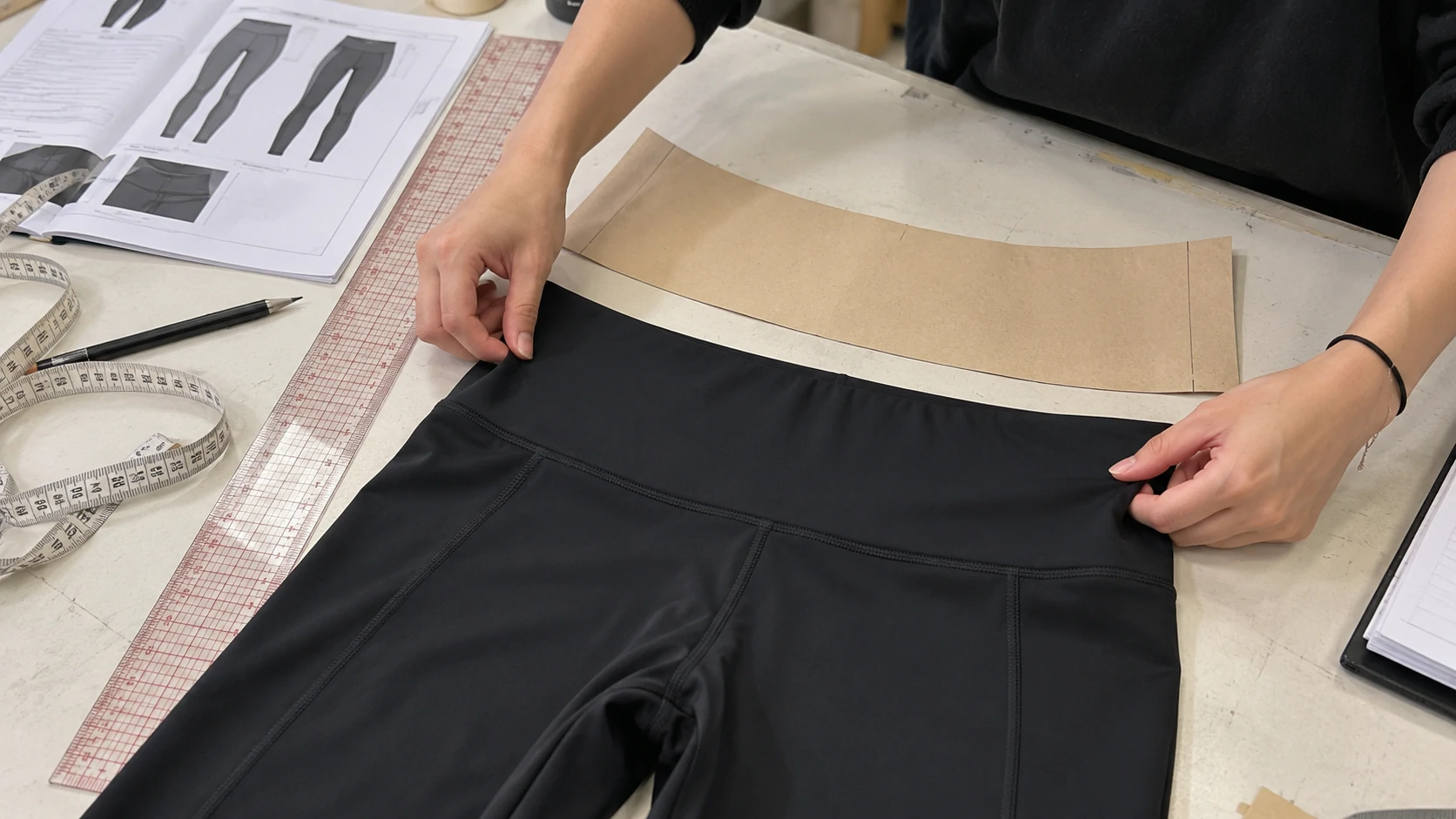
Fabric Recovery Is Critical
Stretch allows the waistband to expand around the body.
Recovery helps it return and maintain tension.
If the fabric stretches easily but does not recover strongly enough, the waistband may gradually lose stability during wear.
This can result in:
- loosening around the waist
- sliding downward
- folding after repeated movement
- reduced compression
- poor shape retention
That is why stretch percentage alone does not tell you whether a fabric will perform well in a waistband.
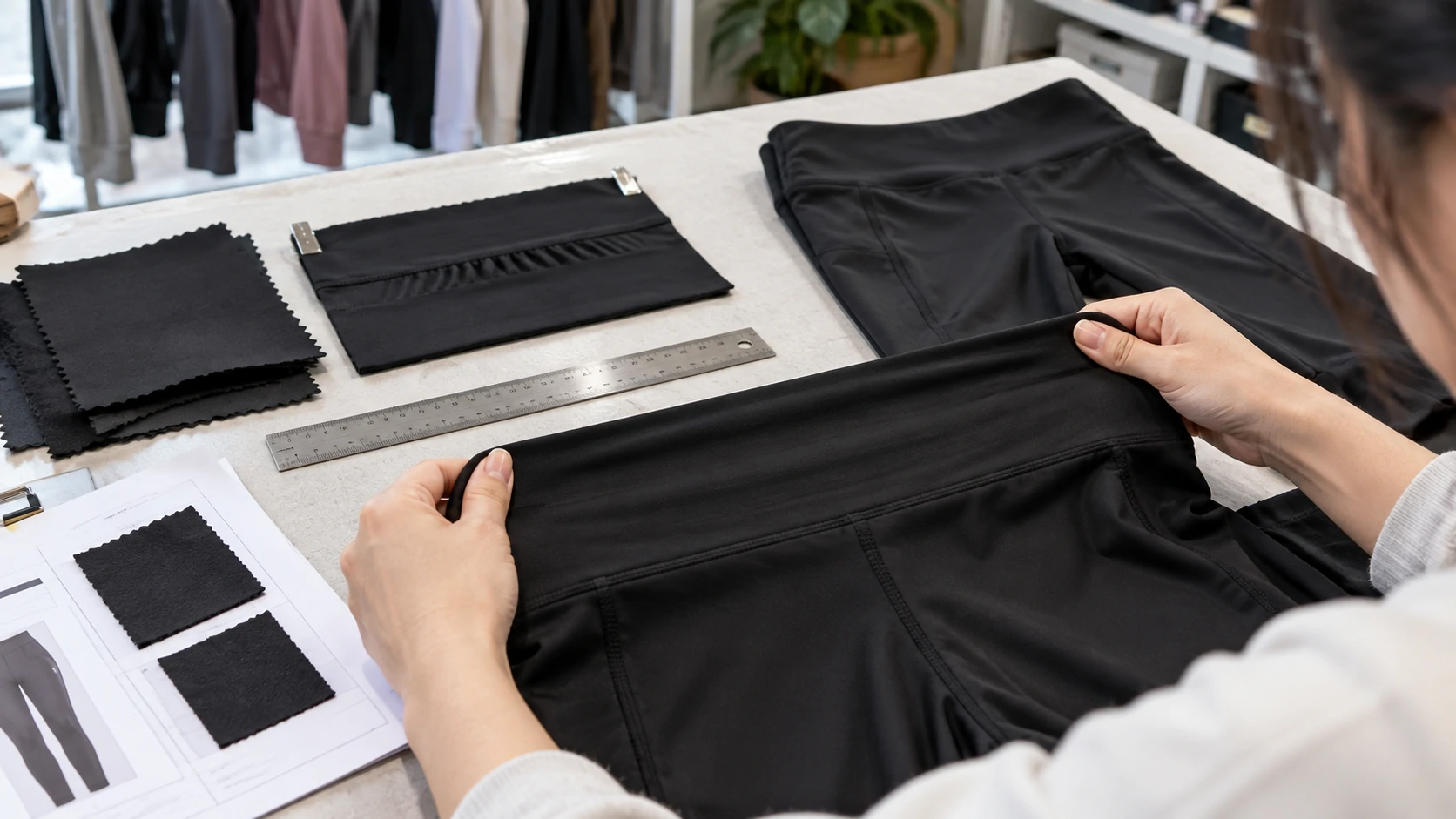
For a closer look at the relationship between stretch and recovery, see how much stretch activewear really needs.
More Compression Is Not Always the Solution
When a waistband rolls, one common reaction is:
“Make it tighter.”
Sometimes additional tension helps.
But excessive compression can create another problem.
If the waistband presses too strongly into the body, soft tissue can push against the upper edge during bending or sitting.
That pressure can encourage the waistband to fold or roll rather than stay flat.
A waistband therefore needs enough tension to remain secure without creating unnecessary pressure.
The goal is balanced support, not maximum tightness.
The Waist-to-Hip Relationship Matters
Waistband problems should not be evaluated independently from the rest of the leggings.
If the hip or seat is too tight, the lower part of the garment may pull downward.
That tension can transfer upward into the waistband.
Likewise, if the waist is too loose while the hip fits correctly, the waistband may not have enough stability to remain in position.
This means a rolling waistband can sometimes be a symptom of an overall fit problem rather than an isolated waistband problem.
When comparing development samples, finished measurements and actual on-body fit should therefore be reviewed together.
If two samples using the same nominal size still behave differently, see why the same size can fit differently between samples.
Waistband Construction Can Change the Result
Two leggings can use the same fabric and similar pattern dimensions but behave differently because the waistband is constructed differently.
Depending on the design, the waistband may include:
- self-fabric layers
- internal elastic
- power mesh
- bonded components
- additional support panels
- different seam constructions
Each option changes the way tension is distributed.
For example, internal elastic can add security, but its width, tension and placement need to work with the waistband rather than fight against it.
Additional reinforcement can improve support but may also make the waistband feel too rigid if the rest of the garment is highly flexible.
Construction should therefore support the intended fit rather than simply add more firmness.
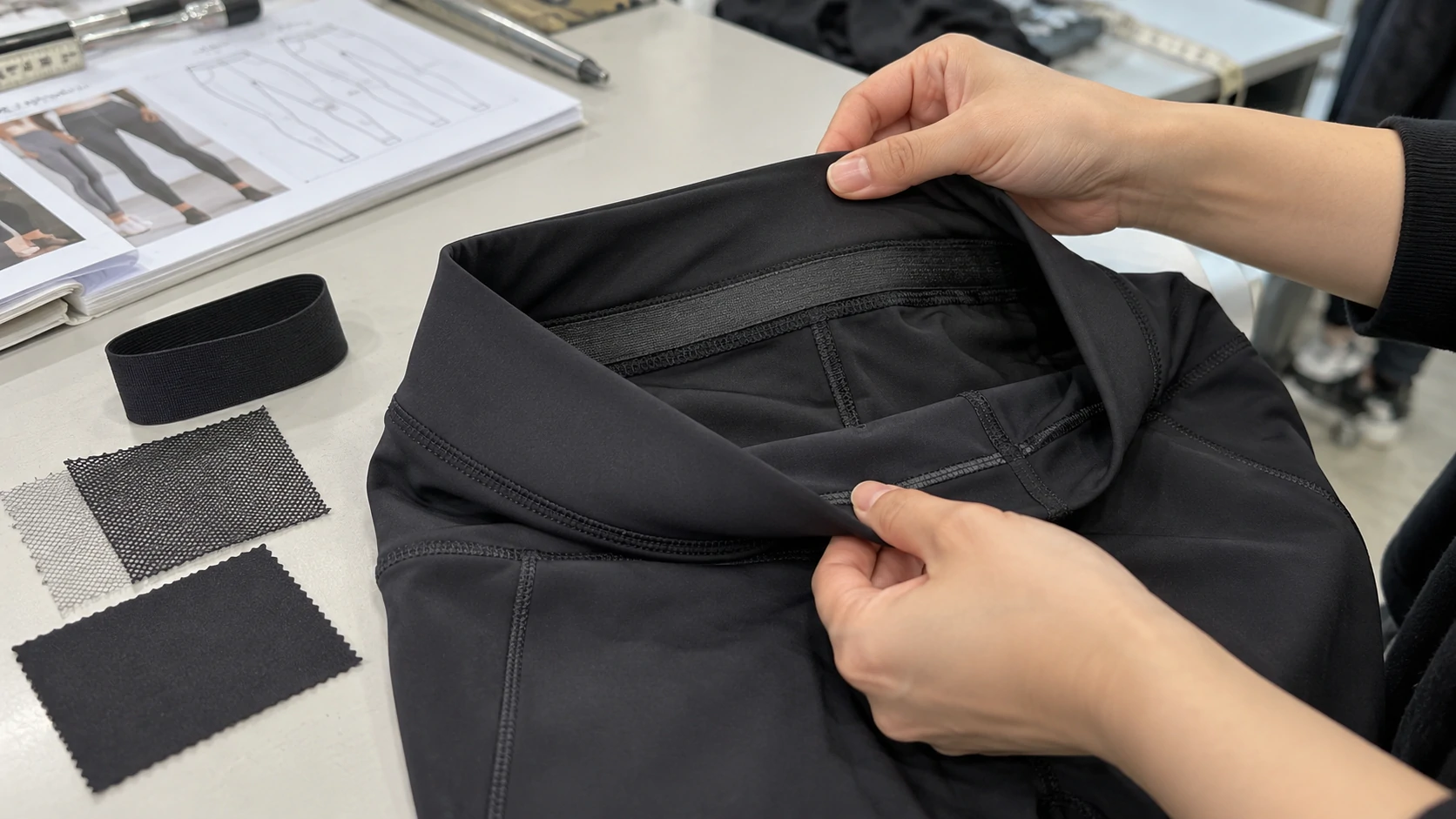
Seam Placement Can Influence Rolling
Where the waistband joins the body of the leggings can also affect how it behaves.
The joining seam creates a structural transition between two areas of the garment.
If there is excessive tension, bulk or stiffness around this area, the waistband may not move naturally with the body.
During sample review, check:
- waistband joining seam
- seam allowance
- stitch tension
- elastic placement
- internal bulk
- alignment between waistband and body panels
The waistband should sit smoothly when relaxed and remain controlled during movement.
Why Does the Waistband Roll During Squats?
Squatting changes the shape of the body significantly.
The hips flex, the seat expands and the torso moves closer to the thighs.
At the same time, the leggings experience increased tension through the hip and seat.
If the waistband does not follow these changes correctly, the top edge may begin to fold.
This can happen because:
- the waistband is too loose at the top
- the waistband is too tight
- the contour does not match the body
- the fabric recovery is insufficient
- the lower garment is pulling downward
- the construction is too soft or too rigid
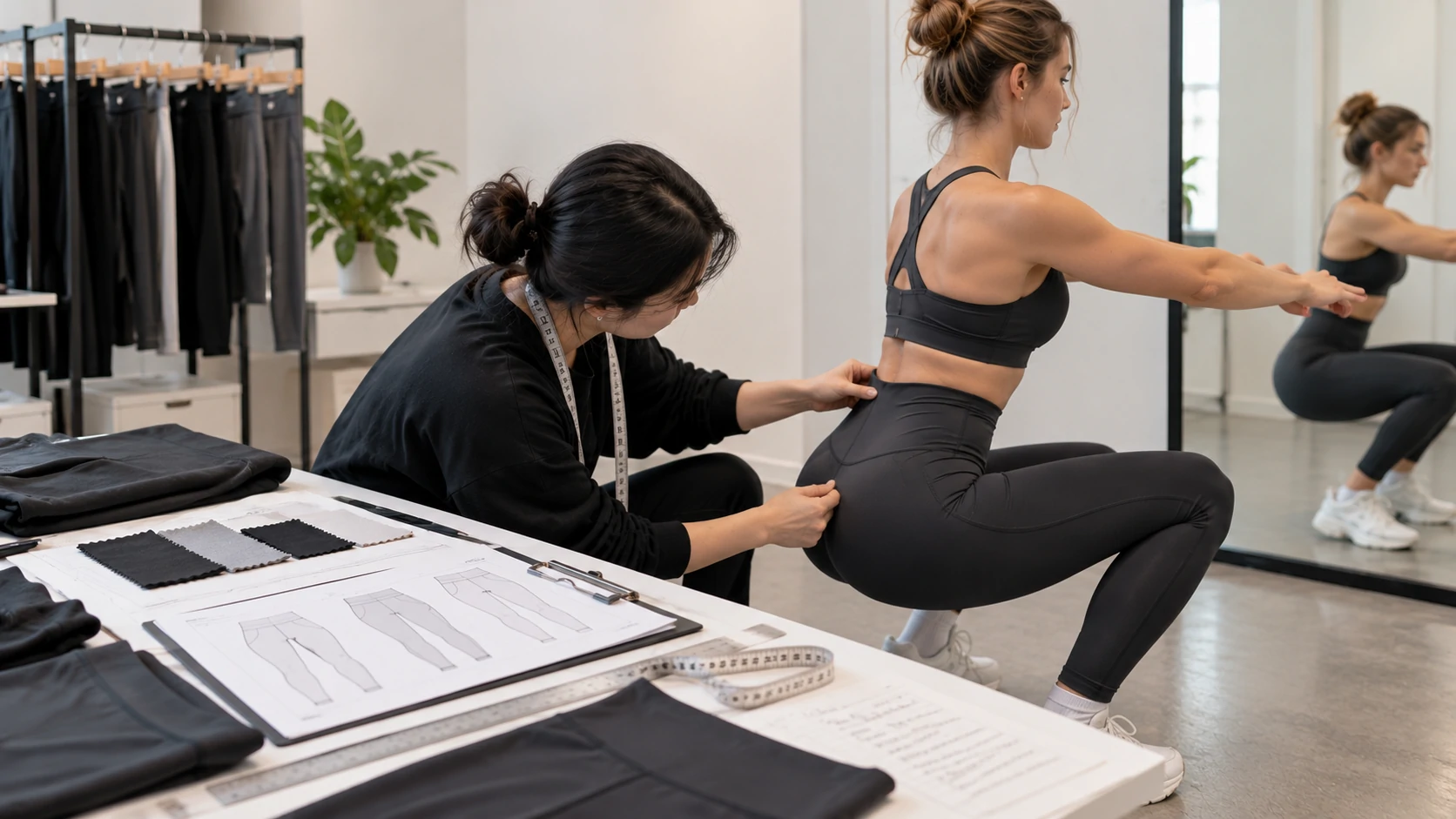
This is why squat testing can reveal problems that are invisible while standing.
Test More Than One Movement
A single squat is useful, but it should not be the entire waistband test.
During sample development, review the garment while:
- standing
- walking
- sitting
- bending forward
- squatting
- raising the knees
- twisting
- repeatedly moving between positions
Also check the waistband after several repetitions.
Some waistbands remain stable during the first movement but gradually shift as the fabric stretches and relaxes.
The purpose of movement testing is to see whether the waistband can maintain its position throughout realistic wear.
Check Whether the Waistband Returns to Shape
After movement testing, allow the garment to relax.
Look at whether the waistband returns to its original shape.
Check for:
- permanent stretching
- waviness
- folding
- uneven tension
- distortion at seams
- looseness around the upper edge
A waistband that looks correct before testing but remains stretched afterward may indicate insufficient recovery or unsuitable construction.
This should be identified during development rather than after bulk production.
Do Not Judge the Waistband on the Wrong Size
Fit testing needs to use an appropriate body size.
If a sample is significantly too small for the wearer, the waistband may experience more tension than intended.
If it is too large, the upper edge may not have enough tension to stay secure.
Both situations can produce misleading conclusions.
The sample should therefore be evaluated against:
- intended body measurements
- finished garment measurements
- target compression
- size specification
This helps separate an actual waistband design problem from a sizing problem.
A Practical Waistband Stability Checklist
Before approving a leggings waistband, review the main variables together.
| Check | What to Review |
|---|---|
| Waistband Height | Whether the height works during standing and movement |
| Contour | Whether the shape follows the intended waist-to-hip profile |
| Upper Edge | Whether it sits flat without excessive pressure |
| Fabric Stretch | Whether the material allows the required movement |
| Recovery | Whether the waistband returns to shape |
| Compression | Whether support is secure without being excessive |
| Construction | Layers, elastic, reinforcement and internal structure |
| Joining Seam | Tension, bulk and alignment with the leggings body |
| Overall Fit | Whether hip and seat tension affect the waistband |
| Movement | Stability during sitting, bending, walking and squatting |
| Size | Whether testing is performed on the intended body measurements |
The waistband should be approved as part of the complete garment, not as an isolated component.
Should You Add Elastic to Stop Waistband Rolling?
Sometimes internal elastic can improve waistband security.
But it should not automatically be treated as the solution.
If the real problem is caused by incorrect contour, poor fabric recovery or excessive garment tension, adding stronger elastic may only mask the underlying issue.
It can also create:
- excessive pressure
- visible indentation
- discomfort
- a harsh upper edge
Before changing the construction, identify why the waistband is rolling.
Then decide whether additional elastic actually addresses that cause.
What If the Waistband Still Rolls After Making It Tighter?
If increasing waistband tension does not solve the problem, stop treating tightness as the only variable.
Review:
- waistband contour
- height
- fabric recovery
- waist-to-hip fit
- hip and seat tension
- construction
- seam bulk
- movement behavior
- sample size
Several small factors can combine to create the problem.
Changing one measurement repeatedly without reviewing the complete garment can lead to unnecessary sample rounds.
Check the Final Sample Before Bulk Production
Waistband performance should be confirmed before the sample is approved for bulk.
Do not rely only on:
- flat garment appearance
- waist measurement
- fabric specifications
- photos
Review the actual garment on the intended fit model and during movement.
This is part of a broader sample approval process involving fit, fabric, construction and performance.
For the complete development checklist, see what you should check before approving a sample.
The Key Takeaway
A rolling waistband does not automatically mean the waistband needs to be tighter.
Waistband stability comes from the relationship between pattern shape, fabric recovery, compression, construction and overall garment fit.
The problem may originate at the upper edge — or it may be caused by tension elsewhere in the leggings.
That is why the most useful development process is to test the complete garment on the intended body size and through realistic movement before deciding what needs to change.
Frequently Asked Questions
Why do high-waisted leggings still roll down?
A higher waistband does not automatically create better stability. If the contour, compression, fabric recovery or overall fit is incorrect, a high waistband can still fold or roll during movement.
Should I make the waistband tighter if it rolls?
Not automatically. More tension can help in some cases, but excessive compression can also encourage the waistband to fold and can reduce comfort.
Does fabric recovery affect waistband rolling?
Yes. A fabric that stretches but does not recover effectively may gradually lose tension and allow the waistband to shift, loosen or fold during wear.
Can the hip fit cause the waistband to roll?
Yes. Excessive tension through the hip and seat can pull the garment downward and affect waistband stability.
Does adding elastic always fix a rolling waistband?
No. Elastic can improve security in some constructions, but it will not necessarily correct problems caused by pattern shape, sizing, fabric recovery or overall garment fit.