Approving a sample is one of the most important decisions in activewear product development.
Once a sample is approved, it can become the reference for bulk production. Measurements, construction, fabric, trims, branding and workmanship may all be expected to follow what was confirmed at this stage.
That means sample approval should involve more than asking:
“Does this look good?”
A better question is:
“Is everything here ready to be reproduced consistently in bulk?”
Start With the Overall Fit
Before checking small details, look at the garment as a complete product.
Try the sample on the intended body size or fit model and review the overall silhouette.
For leggings, consider:
- waistband position
- rise
- hip and seat fit
- thigh fit
- knee fit
- leg opening
- overall length
For sports bras and fitted tops, review:
- neckline position
- underbust fit
- armholes
- strap position
- body length
- compression or support
- overall comfort
A sample can match the measurement chart and still not sit correctly on the body.
That is why measurements and actual fit should always be reviewed together.
Check the Measurements Against the Tech Pack
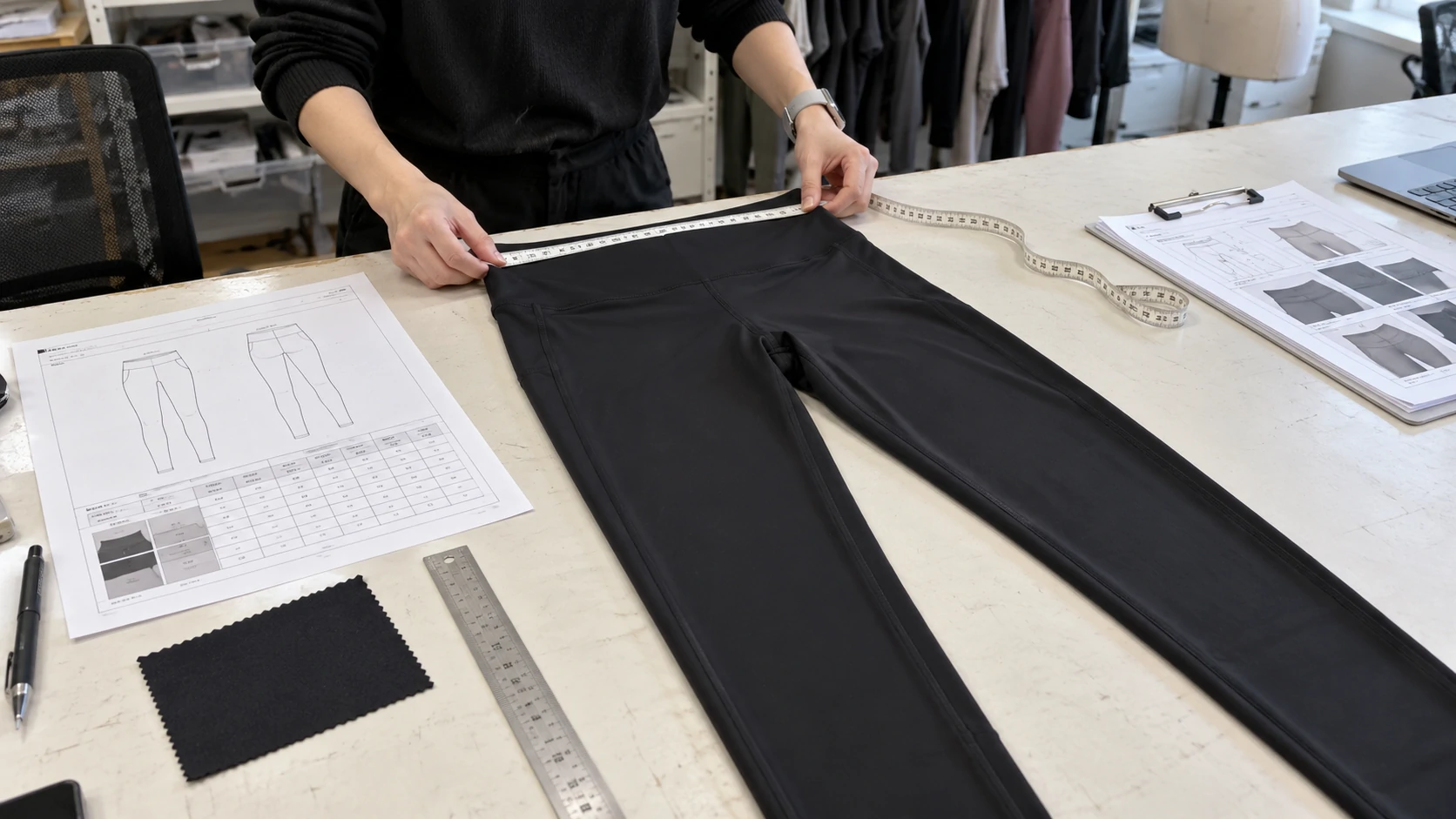
Once the overall fit has been reviewed, compare the finished garment measurements with the approved specification.
Do not check only one or two obvious points.
Depending on the product, important measurements may include:
- waist
- hip
- front rise
- back rise
- inseam
- outseam
- thigh
- leg opening
- underbust
- chest
- body length
- strap length
The measurement method should also be consistent.
Two people can obtain different results from the same garment if they measure from different points or apply different tension.
For important measurement points, the tech pack should make the method as clear as possible.
If two samples use the same size specification but still fit differently, see why the same size can fit differently between samples.
Confirm the Fabric Is the Correct Quality
A sample can fit correctly but still use the wrong material.
Before approval, confirm that the fabric matches what you intend to use for production.
Review:
- composition
- fabric weight
- stretch
- recovery
- surface texture
- hand feel
- opacity
- color
- finishing
For activewear, the fabric should also be evaluated under movement and tension.
A material that looks opaque while lying flat may behave differently once stretched across the body.
Likewise, a fabric that initially feels soft and elastic may not recover well after repeated movement.
Fabric approval should therefore be based on performance as well as appearance.
For a closer look at fabric behavior, see how much stretch activewear really needs.
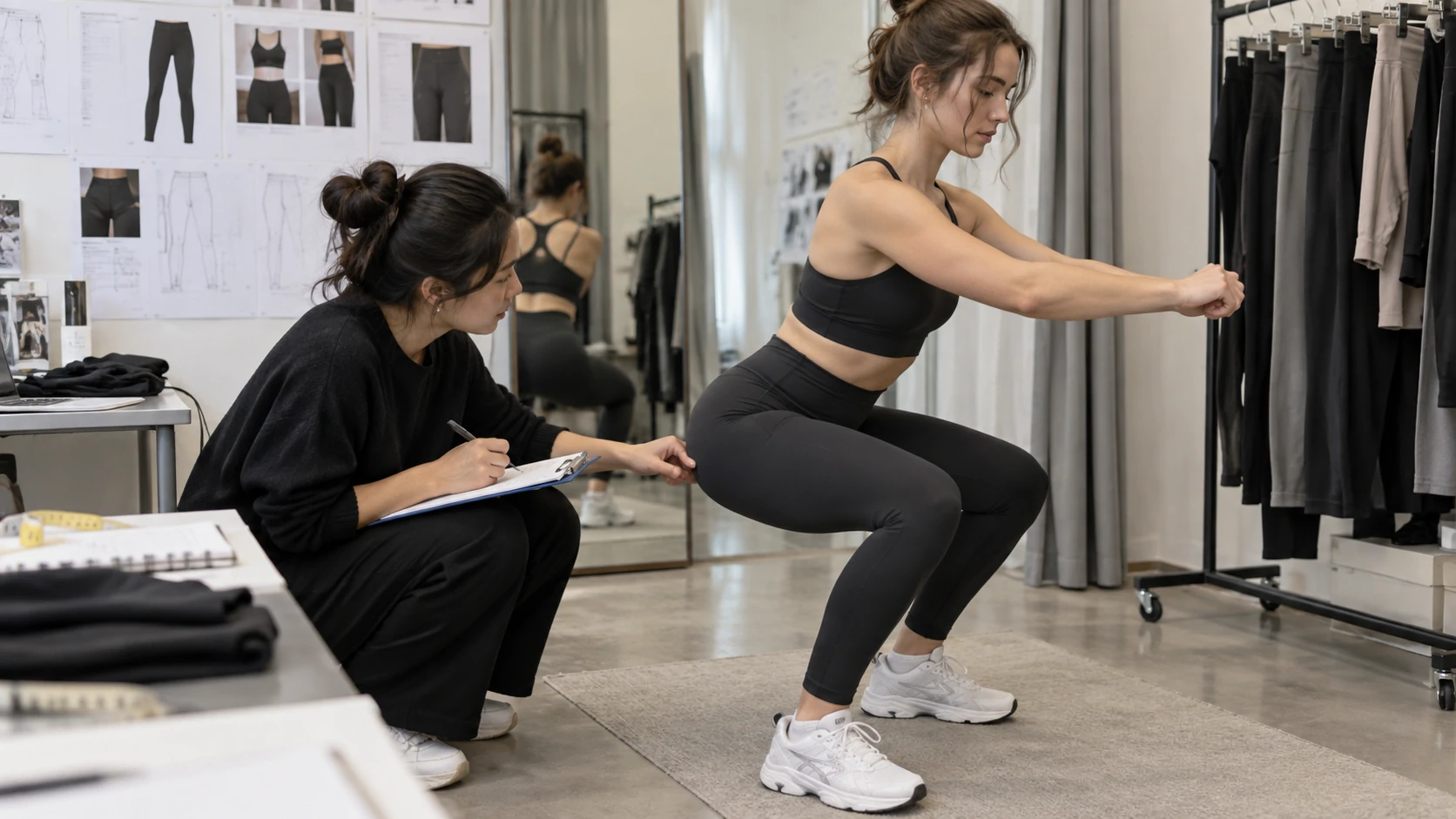
Review the Garment During Movement
Activewear is designed to move.
A sample should not be approved based only on how it looks while the wearer is standing still.
The movements you test should reflect the intended use of the product.
For leggings, this may include:
- squatting
- bending the knees
- walking
- sitting
- stretching
- repeated hip movement
For sports bras and training tops, check the garment while:
- raising the arms
- reaching forward
- rotating the upper body
- bending
- performing normal training movements
Watch what happens to the waistband, neckline, straps, seams and fabric during these movements.
The goal is to identify problems that may not be visible during a static fitting.
Inspect the Construction
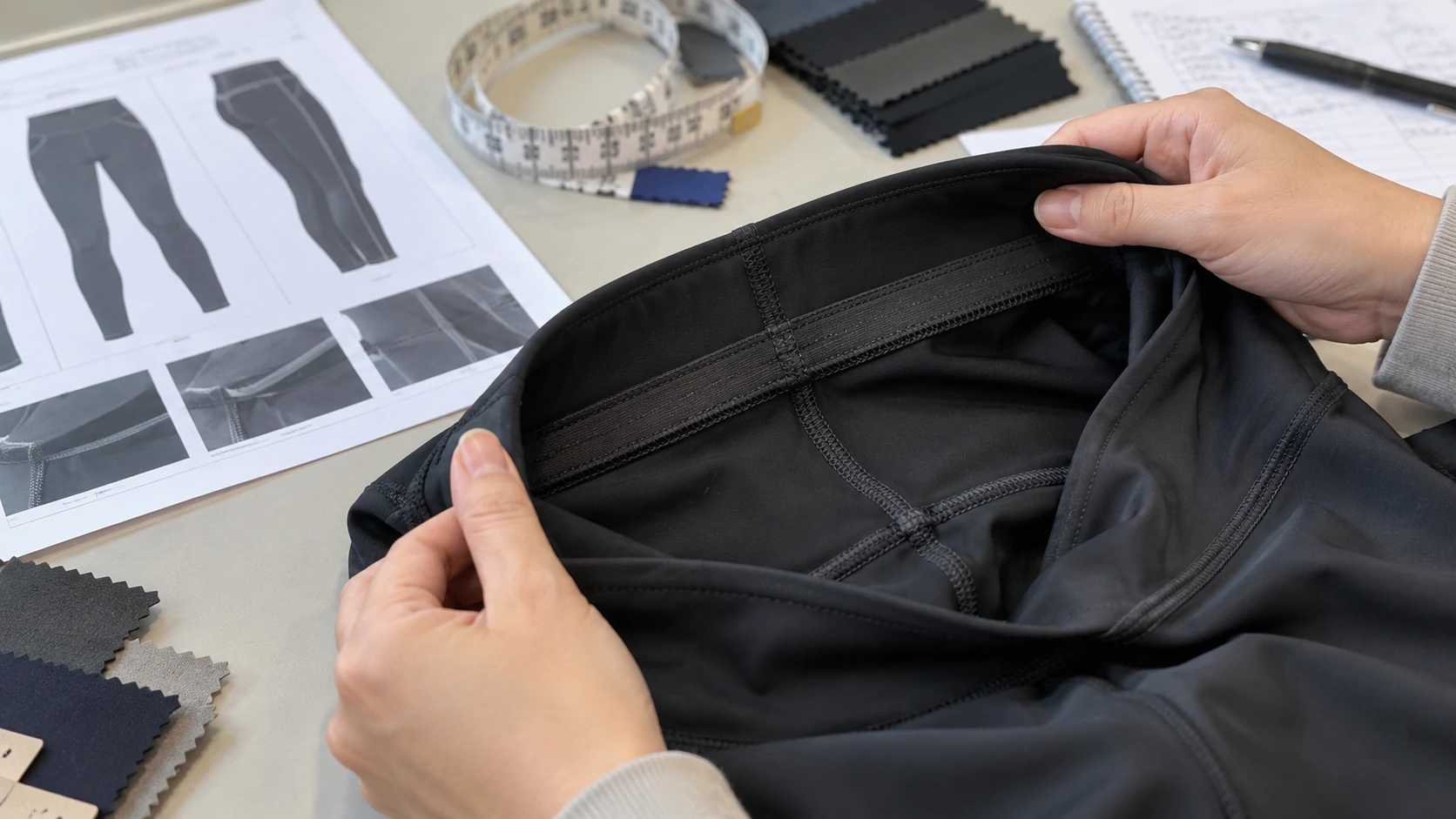
Next, look closely at how the garment has been assembled.
Construction can affect both appearance and performance.
Check areas such as:
- seam position
- seam allowance
- stitch consistency
- waistband construction
- elastic placement
- binding
- hems
- bartacks
- reinforcement points
- inside finishing
For stretch garments, seams should also be reviewed while the fabric is under tension.
A seam that looks clean while relaxed may behave differently when stretched.
Also check whether the construction matches the approved tech pack rather than simply judging whether it looks acceptable.
Check Left-to-Right Symmetry
Symmetry problems are easy to overlook when reviewing a sample quickly.
Place the garment flat and compare both sides.
Check whether:
- straps are the same length
- leg openings match
- side seams sit consistently
- pocket positions match
- panels are aligned
- waistband height is even
- logos are positioned consistently
Small differences can become much more noticeable once repeated across bulk production.
This is why sample approval should include both on-body fitting and flat garment inspection.
Confirm Color and Material Matching
If the garment uses multiple materials, do not review each material separately.
Look at them together in the finished sample.
This is particularly important for products combining:
- main fabric
- rib fabric
- mesh
- lining
- elastic
- binding
- zippers
- printed panels
Two materials may use the same intended color but still appear different because of their composition, texture or surface finish.
Matching sets should also be reviewed together.
If a sports bra and leggings are intended to be sold as one set, check whether they appear visually consistent side by side.
If the approved sample and production color do not appear identical, see why bulk color can look different from the sample.
Review Logos, Prints and Branding
Branding details should be checked carefully before approval because small placement differences can significantly affect the finished appearance.
Review:
- logo size
- logo position
- print quality
- embroidery quality
- transfer adhesion
- label placement
- label content
- hangtags
- packaging requirements
Do not approve branding based only on whether the logo itself looks correct.
Its relationship to seams, panels and the overall garment should also be considered.
A logo positioned slightly incorrectly on one sample may become a repeated issue across hundreds of garments if the placement reference is not corrected before bulk production.
Check Trims and Functional Details
Any functional component should be tested rather than only inspected visually.
Depending on the product, this may include:
- zippers
- drawcords
- elastic
- hooks
- adjusters
- removable pads
- pockets
- snaps
- cord ends
Open, close, pull and use these components as they would be used by the customer.
For pockets, check whether the intended item fits securely.
For adjustable straps or drawcords, confirm that the adjustment range works as expected.
A trim can look correct and still create a functional problem.
Review the Inside of the Garment
Customers may see the outside first, but the inside often reveals construction issues.
Turn the sample inside out and inspect:
- seam finishing
- loose threads
- seam intersections
- label attachment
- elastic attachment
- lining
- reinforcement
- unnecessary bulk
For fitted activewear, internal construction can also affect comfort.
A thick seam intersection or poorly positioned label may become uncomfortable during training even if the outside of the garment looks fine.
Compare the Sample With the Latest Tech Pack
One common development problem is approving a sample while looking at an outdated specification.
Before final approval, make sure the sample is being reviewed against the latest version of the tech pack and comments.
Confirm that previous revisions have actually been completed.
This may include changes to:
- measurements
- pattern shape
- fabric
- color
- logo position
- stitching
- trims
- labels
- packaging
If several development rounds have taken place, clearly identifying the final approved version becomes especially important.
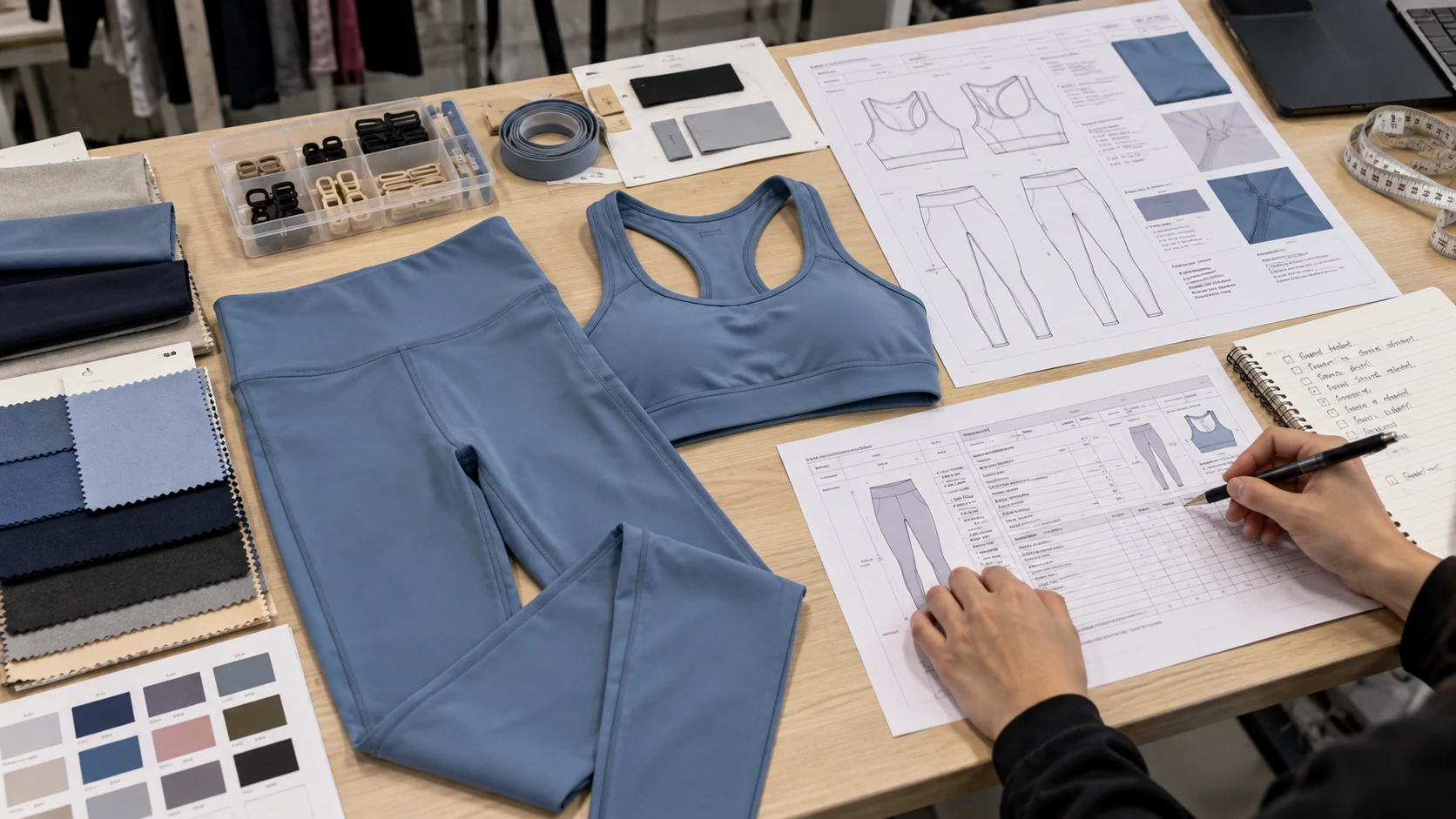
Record Every Final Change Before Approval
Sometimes a sample is considered acceptable except for one or two small changes.
For example:
- move the logo 1 cm
- shorten the strap
- adjust the waistband
- change the label
- correct a stitch detail
These changes should not exist only in WhatsApp messages, emails or memory.
They should be recorded clearly in the final production information.
If the sample is approved with comments, those comments should become part of the production reference.
This reduces the risk of bulk production following the physical sample while missing the final requested adjustment.
A Practical Sample Approval Checklist
Before approving an activewear sample, review the main areas together.
| Area | What to Confirm |
|---|---|
| Fit | Silhouette, comfort and intended compression |
| Measurements | Finished measurements against the latest specification |
| Fabric | Quality, stretch, recovery, opacity and hand feel |
| Movement | Garment behavior during intended activity |
| Construction | Seams, stitching, waistband and finishing |
| Symmetry | Left/right consistency and panel alignment |
| Color | Main fabric, secondary materials and matching pieces |
| Branding | Logo, print, embroidery and label placement |
| Trims | Zippers, elastic, adjusters, pockets and other functions |
| Inside | Internal seams, labels and comfort |
| Tech Pack | All details match the latest approved version |
| Final Comments | Any remaining changes are documented clearly |
The sample should be considered as a complete product rather than a collection of individual details.
What Happens After Sample Approval?
Once the final sample and production details are approved, the project can move toward bulk production.
At this point, the manufacturer should have a clear reference for:
- fit
- measurements
- fabric
- color
- construction
- branding
- trims
- labels
- packaging
However, sample approval does not replace bulk quality control.
Bulk production still needs to be checked against the approved standard because consistency across multiple garments is a different challenge from producing one correct sample.
The approved sample becomes the reference.
Quality control helps determine whether production continues to follow it.
The Key Takeaway
A sample should not be approved simply because it looks good in a photo.
The purpose of sample approval is to confirm that the product is ready to be reproduced consistently in bulk.
Fit, measurements, fabric, movement, construction, color, branding and functional details should all be reviewed before the final decision.
The clearer the approval standard is before production begins, the fewer questions remain once bulk manufacturing is underway.
Frequently Asked Questions
Should I approve an activewear sample from photos only?
Photos can help with development communication, but fit, fabric behavior, comfort and movement are difficult to evaluate completely from images. Whenever possible, the physical sample should be reviewed before final approval.
Can I approve a sample with small changes still required?
Yes, but every remaining change should be documented clearly. The production team should know which parts of the physical sample are approved and which details must still be changed.
Why should I measure the sample if the fit already looks correct?
Visual fit and finished measurements provide different information. Measurements help create a reproducible production standard, while fitting shows how those measurements behave on the body.
Should matching activewear pieces be approved together?
When products are intended to be sold as a matching set, reviewing them together helps identify differences in color, proportion, branding and overall appearance.
Does an approved sample guarantee that every bulk garment will be identical?
An approved sample establishes the production reference, but bulk manufacturing still requires quality control. Materials and finished garments should be checked to ensure production remains consistent with the approved standard.