
Choosing activewear fabric is not simply a matter of finding a material that feels soft or stretches well.
A fabric that works for a lightweight training top may not provide enough coverage for leggings. A fabric that creates strong compression may feel too restrictive for yoga. And two fabrics with similar compositions can still perform very differently once they are made into garments.
For activewear brands, fabric selection should begin with one question:
What does this product need to do when it is actually worn?
The answer usually comes down to four important factors:
- fabric weight
- stretch and recovery
- coverage
- hand feel
Understanding how these factors work together makes it easier to choose fabric for different activewear products before sample development begins.
There Is No Single “Best” Activewear Fabric
It is tempting to search for one ideal fabric specification and use it across an entire collection.
In practice, different products create different performance requirements.
Leggings need to stretch around the hips, thighs and knees while maintaining coverage.
Sports bras need enough recovery and stability to provide support.
Training tops may need greater breathability and a lighter hand feel.
Compression garments require controlled resistance against the body.
This means fabric should be selected according to the product, fit and intended use, rather than composition alone.
1. Start With the Product
Before comparing GSM, nylon percentages or stretch values, define the garment you are developing.
Ask:
- Is it fitted or relaxed?
- Is it intended for yoga, gym training, running or everyday wear?
- Does it need compression?
- Does it need high coverage?
- How much movement will the garment experience?
- Should the fabric feel soft, structured or supportive?
These questions create a much better starting point than simply asking for “high-quality activewear fabric.”
The same material can perform very differently depending on the garment.
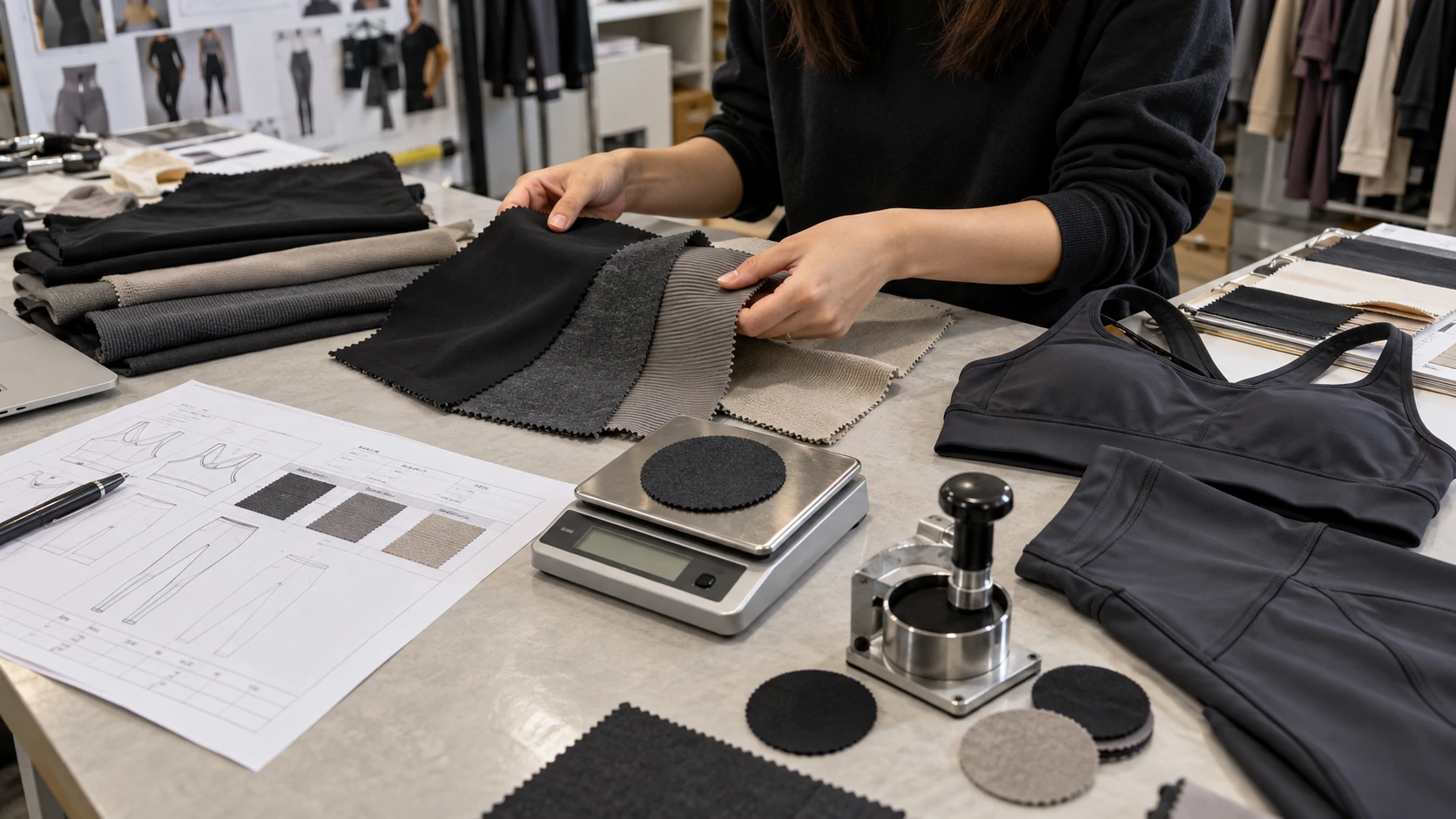
2. Fabric Weight Changes More Than Thickness
Fabric weight is commonly expressed in GSM — grams per square meter.
A higher GSM generally means more material mass per square meter, but GSM alone does not tell you everything about performance.
Two fabrics with similar GSM can still differ in:
- density
- stretch
- recovery
- surface texture
- compression
- coverage
- hand feel
That is why fabric weight should be evaluated together with the other performance characteristics.
For Leggings
Leggings usually need enough substance to provide coverage while still allowing comfortable movement.
If the fabric is too light or opens too much under stretch, opacity can become a problem.
If you are developing leggings, see our guide on why leggings can still become sheer.
For Training Tops
Training tops can often use lighter materials because they do not normally experience the same coverage requirements as leggings.
Breathability, moisture management and comfort may become more important.
For Compression Products
Compression garments may require a denser or more resistant fabric structure, but the target should be controlled support rather than simply choosing the heaviest possible material.
Higher GSM does not automatically mean better activewear.
The correct weight depends on the product.
3. Stretch Should Match the Garment
Stretch is one of the most important characteristics of activewear fabric.
But “very stretchy” is not a complete specification.
You need to consider:
- how far the fabric stretches
- in which direction it stretches
- how much resistance it creates
- how well it returns after stretching
A garment that requires significant movement needs enough extension to move with the body.
At the same time, too much uncontrolled stretch can reduce support and affect fit.
For a deeper explanation, read how much stretch activewear really needs.
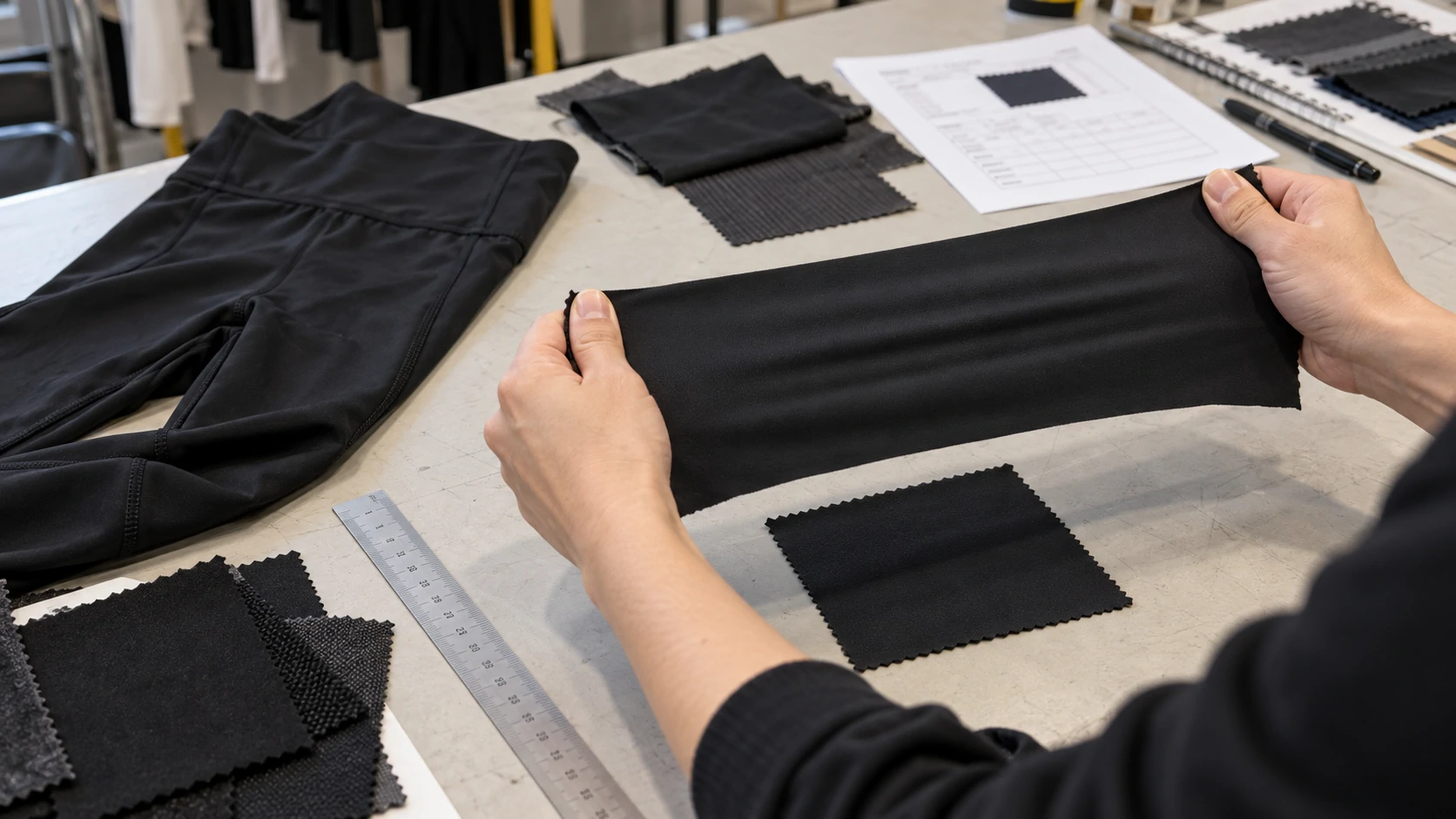
4. Recovery Is Just as Important as Stretch
Stretch describes extension.
Recovery describes what happens afterwards.
When activewear fabric stretches around the body, it should recover toward its original dimensions once the tension is removed.
Poor recovery can contribute to problems such as:
- loose knees
- unstable waistbands
- reduced compression
- shape loss
- inconsistent fit after wear
This is why two fabrics that both appear highly elastic can create very different garments.
One may stretch easily and recover strongly.
Another may stretch easily but return more slowly or less completely.
For fitted activewear, both properties matter.
5. Coverage Must Be Tested Under Stretch
A fabric can look completely opaque while lying flat on a table and still become sheer when worn.
Why?
Because stretching changes the fabric structure.
As the material extends, yarns move apart and coverage can decrease.
This is particularly important for:
- leggings
- shorts
- fitted bodysuits
- light-colored activewear
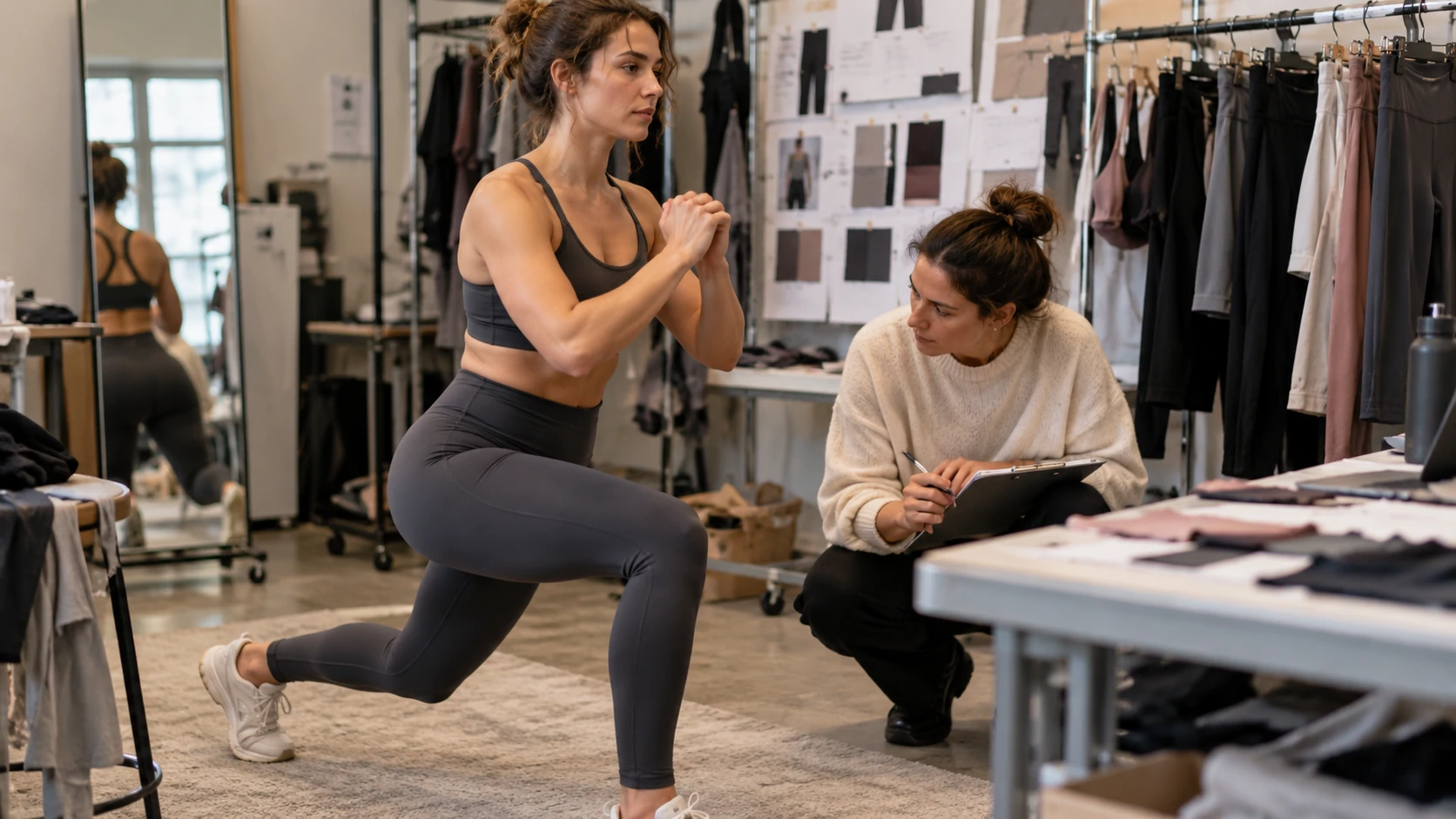
Coverage should therefore be checked under realistic extension rather than judged only from an unstretched swatch.
For leggings, a practical stretch or squat test during development can reveal issues that are difficult to see from the fabric roll alone.
6. Hand Feel Affects How Customers Perceive the Product
Performance is important, but customers also experience activewear through touch.
Hand feel can make a product feel:
- soft
- smooth
- brushed
- cool
- dry
- firm
- structured
- compressive
There is no universally correct hand feel.
A soft brushed fabric may work well for yoga or lifestyle products.
A smoother, cooler surface may suit training wear.
A firmer hand may support a more compressive product.
The important point is that the hand feel should support the intended product positioning.
7. Choosing Fabric for Leggings
Leggings place demanding requirements on fabric because the material stretches significantly across multiple areas of the body.
Important characteristics usually include:
- adequate stretch
- strong recovery
- sufficient coverage
- appropriate compression
- comfortable hand feel
- dimensional stability
Waistband performance should also be considered.
A fabric that feels good through the legs may not automatically create a stable waistband.
Construction and pattern also matter, which is why waistband problems should not be blamed on fabric alone.
See why activewear waistbands roll down for the relationship between fabric, pattern and construction.
8. Choosing Fabric for Sports Bras
Sports bras need a different balance.
The fabric should move with the body while maintaining enough recovery and stability for the intended level of support.
Important considerations include:
- stretch direction
- recovery
- compression
- softness against the skin
- moisture management
- stability around the underbust area
The correct material also depends on the product design.
A low-impact yoga bra and a high-support training bra should not automatically use the same fabric simply because both are called sports bras.
Straps, elastic, lining and construction also influence the final support level.
9. Choosing Fabric for Activewear Tops
Activewear tops can have very different requirements depending on their fit.
A fitted compression top may need strong recovery and controlled stretch.
A lightweight training tee may prioritize:
- breathability
- moisture management
- softness
- lightweight comfort
A fitted crop top may sit somewhere between the two.
This is why the intended silhouette should be defined before the fabric is finalized.
10. Choosing Fabric for Shorts
Activewear shorts often need many of the same characteristics as leggings.
However, the product length and construction can change how the fabric behaves.
Consider:
- coverage
- stretch around the hip
- recovery
- leg opening stability
- waistband support
- compression
For fitted shorts, fabric that rolls or shifts around the leg opening can create a poor wearing experience even when the waist fits correctly.
The fabric and pattern should therefore be evaluated together.
11. Yoga and Training Wear May Need Different Fabric Behavior
A yoga product usually prioritizes freedom of movement and comfort.
A high-intensity training product may need more stability and stronger recovery.
For example:
Yoga
The desired fabric may emphasize:
- softness
- flexible stretch
- comfortable recovery
- smooth movement
- pleasant skin feel
Gym / Training
The desired fabric may emphasize:
- stronger recovery
- greater support
- abrasion resistance
- sweat management
- shape retention
This does not mean every yoga fabric must be soft or every training fabric must be compressive.
It means the activity should influence the material decision.
12. Do Not Choose Fabric by Composition Alone
A fabric specification such as:
75% Nylon / 25% Spandex
can be useful information.
But it does not tell you exactly how the finished fabric will perform.
Two fabrics with the same fiber percentages can still have different:
- knitting structures
- GSM
- density
- finishing
- stretch
- recovery
- surface feel
Composition is therefore one part of the specification — not the complete answer.
Physical fabric evaluation and sample testing are still necessary.
13. Changing Fabric Can Change the Fit
One of the most common development mistakes is approving a garment and then replacing the fabric with something that appears similar.
Even if the pattern remains unchanged, a different material can change:
- compression
- ease
- stretch distribution
- recovery
- drape
- perceived garment size
This is why a fabric substitution may require another fit evaluation.
We explain this in more detail in why fit can change after switching fabric.
14. Test the Fabric Before Bulk Production
Fabric selection should not end when a swatch looks good.
Before bulk production, the selected material should be evaluated in the actual product.
Depending on the garment, development testing may include:
- stretch testing
- recovery testing
- coverage testing
- fit testing
- wash testing
- measurement checks
- color evaluation
- hand-feel comparison
The purpose is to understand how the material behaves as a garment, not just as a fabric swatch.
15. Evaluate the Finished Sample
The sample brings fabric, pattern and construction together.
This is where the brand can determine whether the original material decision actually works.
Check:
- overall fit
- movement
- compression
- coverage
- waistband behavior
- comfort
- recovery
- finished appearance
If the result is not correct, identify the cause before making changes.
Sometimes the fabric is the problem.
Sometimes the pattern or construction is responsible.
Changing multiple variables at the same time makes the cause harder to identify.
Before moving into production, use a structured approval process. See what you should check before approving a sample.
A Practical Fabric Selection Guide
| Product | Fabric Priorities |
|---|---|
| Leggings | Coverage, stretch, recovery, compression, stability |
| Sports Bras | Recovery, support, comfort, stretch, stability |
| Yoga Wear | Softness, flexible stretch, comfort, recovery |
| Training Tops | Breathability, moisture management, comfort |
| Compression Tops | Controlled stretch, strong recovery, support |
| Fitted Shorts | Coverage, recovery, waistband and leg stability |
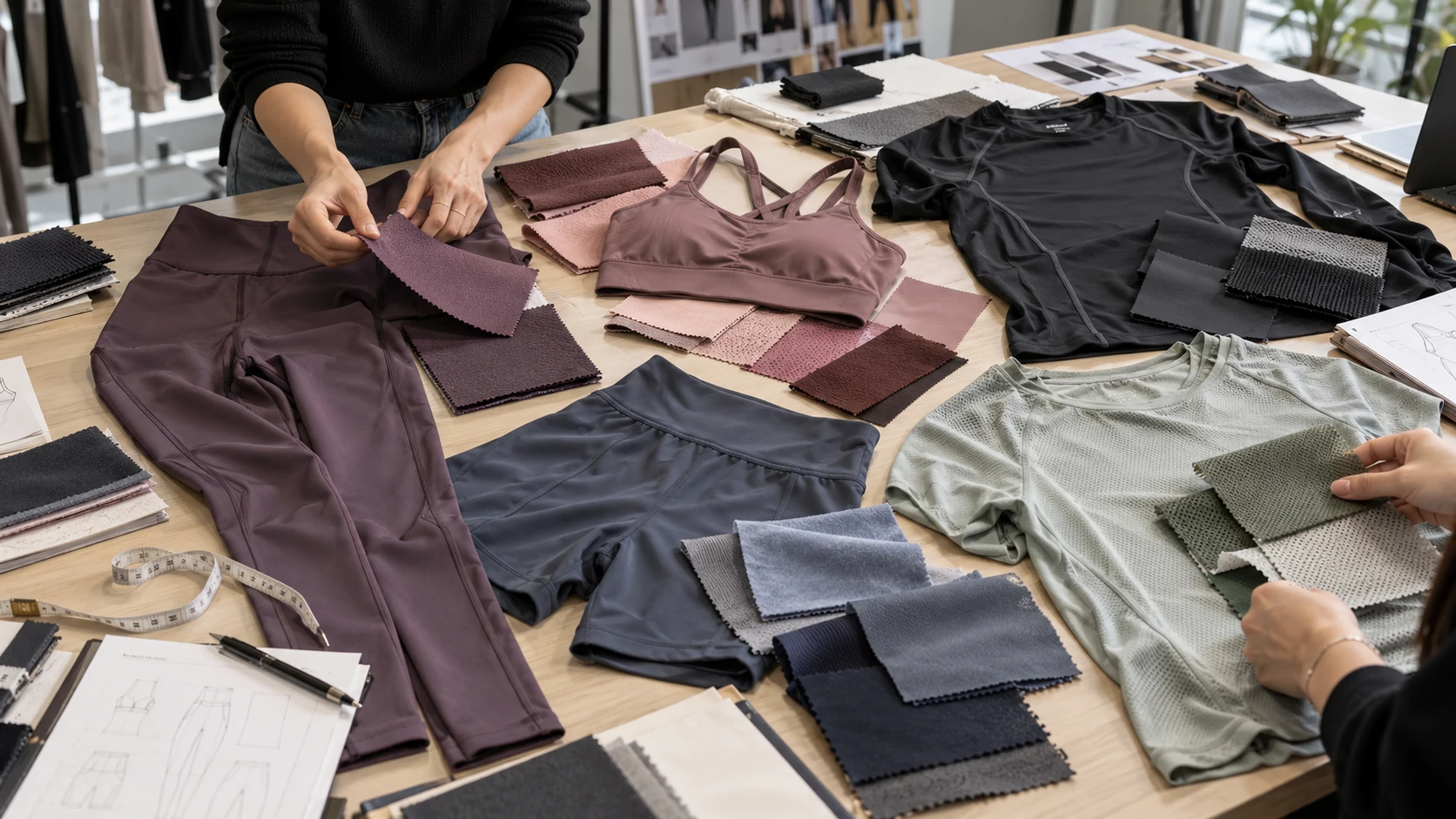
These are starting points rather than universal specifications.
The exact fabric should still be selected according to the design, target fit and intended activity.
Questions to Ask Before Approving an Activewear Fabric
Before approving a material, ask:
- What product will this fabric be used for?
- How much movement does the garment need?
- Does the fabric provide enough coverage under stretch?
- How strongly does it recover?
- What level of compression is intended?
- Does the hand feel match the brand's product positioning?
- Has the material been tested in the actual garment?
- Does the finished sample still perform correctly after wear and washing?
If these questions cannot be answered from the fabric swatch alone, sample development should provide the answer.
The Key Takeaway
Choosing activewear fabric is about matching material behavior to product requirements.
Fabric weight, stretch and recovery, coverage and hand feel should be evaluated together — not as isolated specifications.
A fabric that performs well for one garment may be unsuitable for another.
The most reliable development process is therefore:
define the product → identify the required performance → compare fabrics → make the sample → test the finished garment → approve the material for bulk production.
This approach gives brands a much clearer basis for fabric decisions than simply choosing a composition, GSM or fabric that feels good in the hand.
Frequently Asked Questions
What fabric is best for activewear?
There is no single best activewear fabric. The appropriate material depends on the product, intended activity, fit, compression, coverage and desired hand feel.
What fabric is best for leggings?
Leggings generally require a balance of stretch, recovery, coverage and comfort. The exact GSM and composition depend on the intended fit and performance.
Is higher GSM better for activewear?
Not necessarily. Higher GSM means greater fabric mass, but it does not automatically guarantee better stretch, recovery, coverage or comfort.
How much spandex should activewear contain?
Spandex percentage alone cannot determine performance. Fabric structure, density, finishing, stretch and recovery should also be evaluated.
Why does the same fabric feel different in different products?
Garment pattern, compression, seam construction, lining, elastic and the amount of fabric extension on the body can all affect the final wearing experience.