
A sample can fit exactly the way you want — and then feel completely different after changing the fabric.
The pattern may be unchanged.
The measurements may still match the same specification.
The garment may even look almost identical when laid flat.
Yet once it is worn, the new version can feel tighter, looser, shorter, more compressive or less supportive.
Why?
Because in activewear, fit is not created by the pattern alone.
The final result comes from the relationship between the pattern, fabric stretch, recovery, weight, structure and the body.
Changing the fabric changes that relationship.
The Same Pattern Does Not Guarantee the Same Fit
A garment pattern defines the shape and dimensions of the product.
But the fabric determines how that shape behaves once it is stretched over the body.
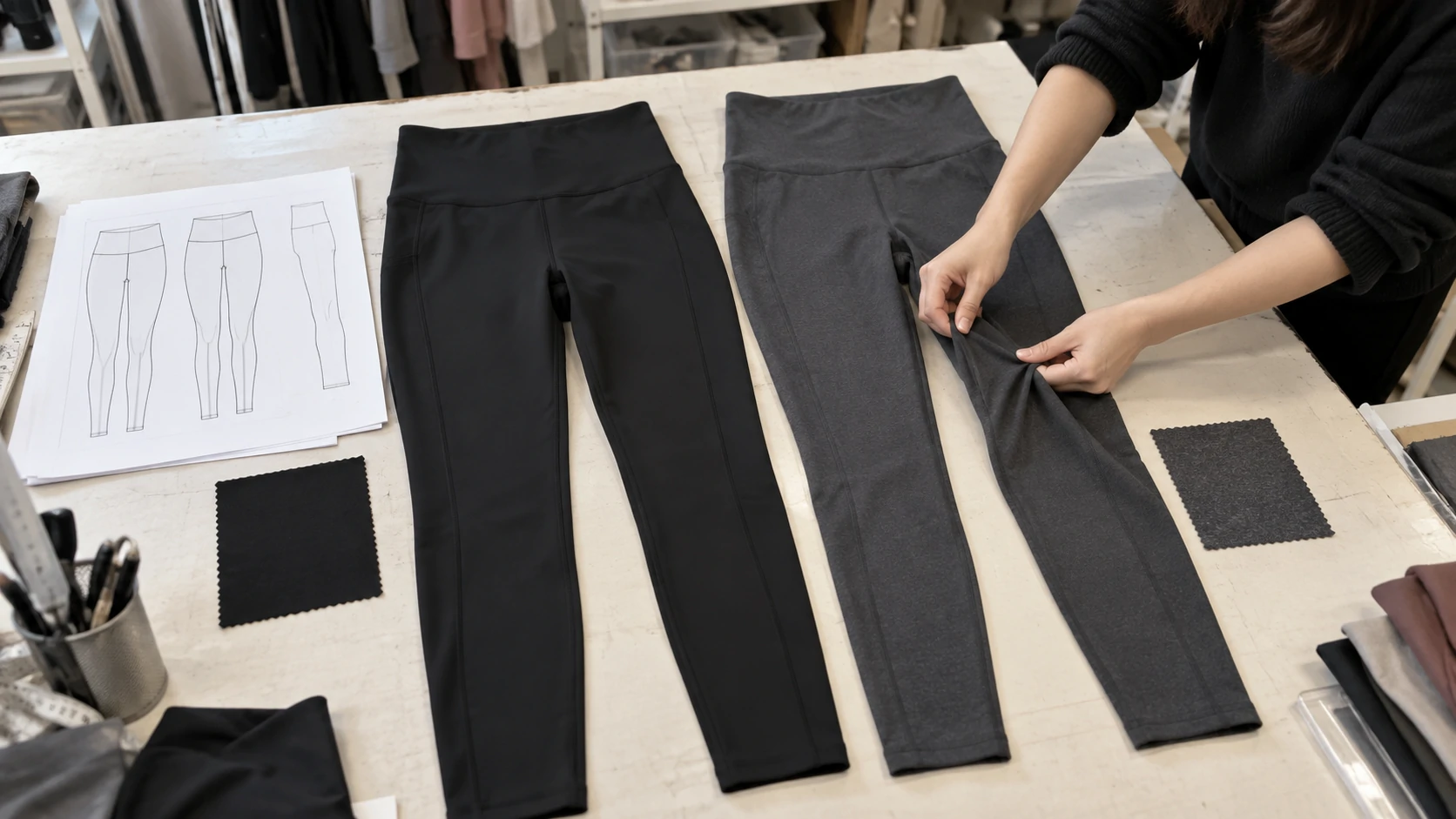
Imagine producing the same leggings pattern in two different fabrics.
Fabric A may stretch easily and conform to the body with relatively little resistance.
Fabric B may have less stretch or stronger resistance.
Even if both garments have the same finished measurements, Fabric B can feel noticeably tighter.
This is why identical pattern measurements do not necessarily create identical wearing experiences.
For a related example, see why the same size can fit differently between samples.
Stretch Percentage Can Change the Fit
One of the first things to compare after switching fabric is stretch.
If the original material stretches further than the replacement fabric, the garment may require more force to reach the same body dimensions.
This can affect:
- waist comfort
- hip fit
- thigh compression
- rise
- leg opening
- mobility
- overall pressure
The direction of stretch matters as well.
A fabric may provide sufficient widthwise stretch but behave differently in the length direction.
For leggings, changes in lengthwise stretch can influence how the garment behaves through the rise, knee and overall length.
That is why a single stretch number does not describe the complete behavior of an activewear fabric.
For more detail, see how much stretch activewear really needs.
Recovery Changes How the Garment Holds the Body
Stretch tells you how far a material can extend.
Recovery tells you how effectively it returns toward its original shape.
Two fabrics can have similar stretch but different recovery.
A fabric with stronger recovery may create:
- firmer compression
- stronger shape retention
- a more secure waistband
- greater resistance against the body
A fabric with weaker recovery may feel softer or easier to put on, but it may also become less supportive during wear.
This means changing fabric can alter the perceived fit even when the maximum stretch appears similar.
The garment may technically reach the same dimensions while creating a completely different level of tension.
Fabric Weight Can Affect the Wearing Experience
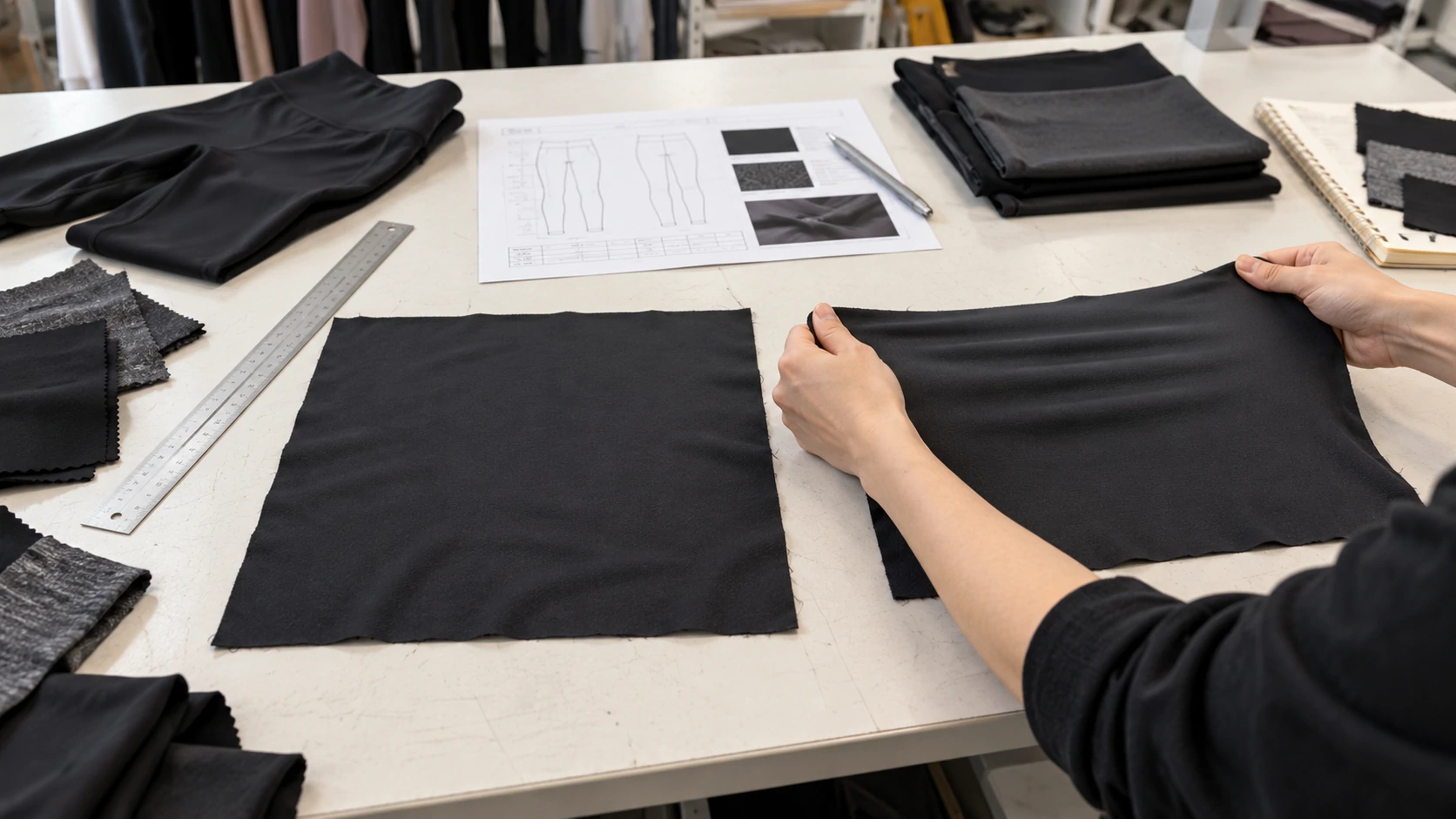
Fabric weight can also change how a garment feels and behaves.
A heavier material may feel:
- more substantial
- more supportive
- more compressive
- less fluid
A lighter material may feel:
- softer
- more flexible
- less restrictive
- more responsive to movement
However, GSM should not be considered independently.
Two fabrics with similar weight can still behave differently because their knit structure, composition and finishing are different.
The important question is not simply:
“Is the GSM the same?”
It is:
“Does this fabric behave similarly enough for this pattern?”
Knit Structure Matters
Activewear fabrics can look similar while having different internal structures.
Knit density, yarn type and construction influence how the material responds to tension.
One fabric may stretch smoothly across the body.
Another may resist more strongly.
A third may stretch easily in one direction but significantly less in another.
These differences affect how the garment distributes pressure across the body.
This is why approving a replacement fabric based only on appearance, composition or weight can create unexpected fit changes.
Fabric Composition Can Change Performance
A change in fiber composition can also affect the way a garment fits.
Different combinations of fibers and elastomeric content can influence:
- elasticity
- recovery
- softness
- compression
- moisture behavior
- surface feel
- shape retention
Even when two fabrics have similar specifications on paper, their actual performance may not be identical.
Finishing processes can create additional differences.
For this reason, fabric substitution should be treated as a product development decision rather than simply a sourcing change.
Why Can the Rise Feel Different?
Leggings are particularly sensitive to fabric changes because the material is stretched across several areas of the body at the same time.
If the replacement fabric has different vertical stretch or resistance, the rise may feel different even when the garment measures the same while flat.
The wearer may notice:
- a lower-feeling waistband
- increased pressure through the crotch
- reduced mobility
- more pulling through the seat
- a different waistband position
The pattern has not necessarily changed.
The fabric is simply responding differently once it is placed under tension.
Why Can the Leggings Feel Shorter?
The same principle applies to garment length.
When leggings are worn, some of the available fabric extension is used to accommodate the three-dimensional shape of the body.
If the replacement material behaves differently in the length direction, the garment can appear or feel shorter.
This may be especially noticeable around:
- the rise
- the thighs
- the knees
- the ankle
Flat garment length alone therefore cannot explain every fit difference.
The fabric's behavior on the body also matters.
Compression Can Change Without Changing Measurements
This is one of the most important points for activewear development.
Two leggings can have almost identical finished measurements but create different levels of compression.
Why?
Because compression depends on how much resistance the fabric creates when stretched to the dimensions of the body.
A softer, more extensible fabric may produce relatively low pressure.
A firmer fabric with stronger recovery may produce substantially more pressure from the same pattern.
This is why brands should not approve a fabric replacement simply because the finished garment measurements remain within tolerance.
Measurement consistency does not automatically mean fit consistency.
Fabric Changes Can Affect Waistband Performance
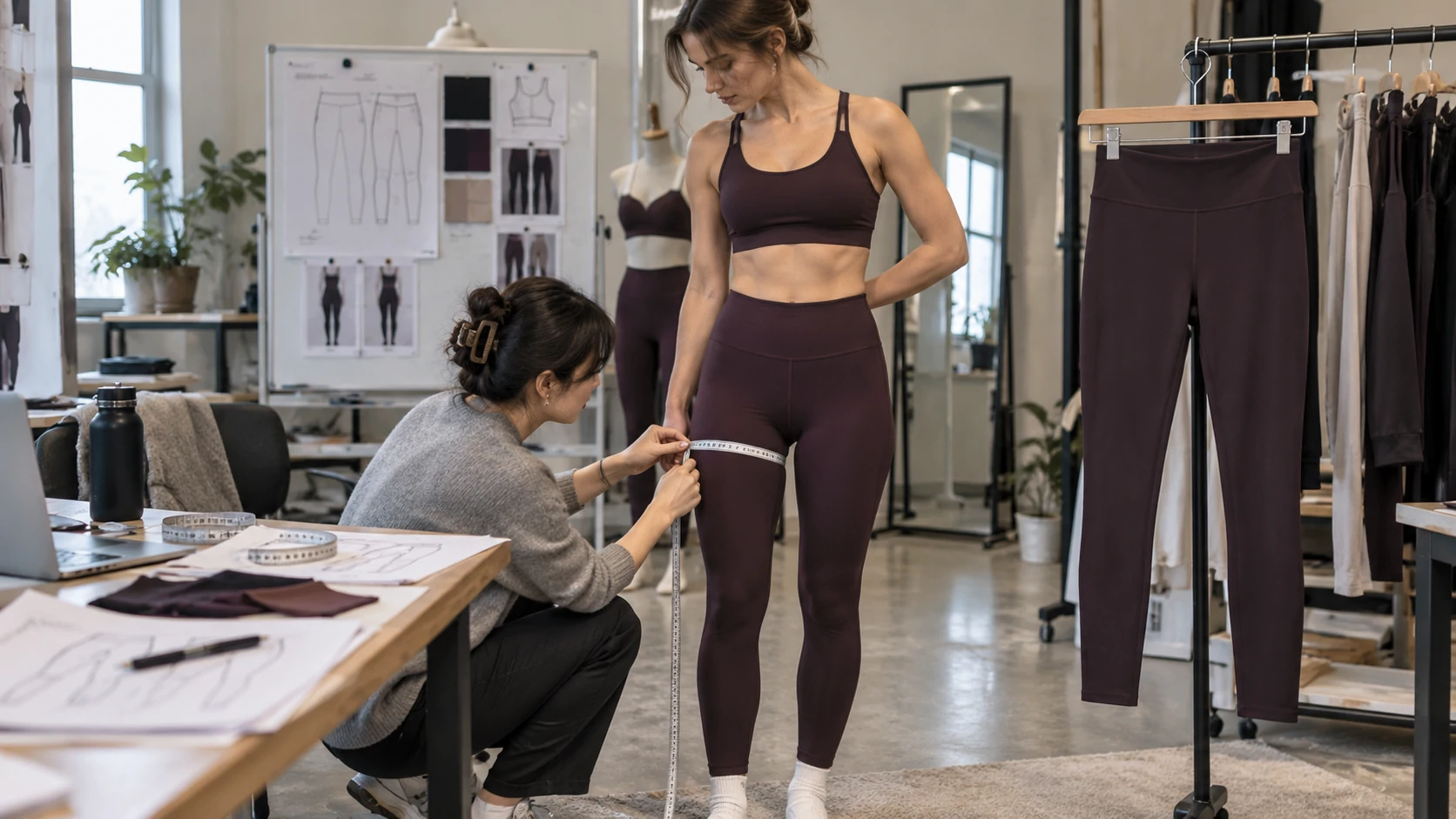
The waistband is another area where fabric substitution can quickly become noticeable.
A replacement fabric may have:
- different recovery
- different thickness
- different compression
- different stretch resistance
As a result, the waistband may become looser, tighter or less stable.
It may also behave differently during sitting, bending or squatting.
If waistband stability becomes a problem after changing material, see why the waistband rolls down.
Opacity Can Change Too
Fit is not the only thing affected by a fabric change.
If the replacement material stretches differently, its coverage can also change once worn.
A fabric that appears opaque while relaxed may open more under tension.
If the new material requires greater stretch to fit the same pattern, areas such as the hip and seat may experience more tension.
This can make sheerness more noticeable.
For more on this relationship, see why leggings can still be sheer.
Do Not Compare Fabric Swatches Only
Fabric swatches are useful for comparing:
- color
- hand feel
- surface texture
- approximate stretch
- thickness
But they cannot show the complete effect on garment fit.
Once a fabric is cut and sewn into a fitted activewear product, multiple forces interact at the same time.
The material stretches around the waist, hip, seat and legs while the seams and waistband influence how that tension is distributed.
This is why the replacement fabric should be tested as a finished sample.
Make a New Sample After a Significant Fabric Change
If the replacement material behaves meaningfully differently from the approved fabric, producing a new sample is usually safer than assuming the original pattern will still work.
The new sample allows the development team to evaluate:
- overall fit
- compression
- rise
- waistband stability
- mobility
- garment length
- recovery
- opacity
- construction behavior
The pattern may still work without modification.
But that decision should come from testing rather than assumption.
Compare the Old and New Samples Side by Side
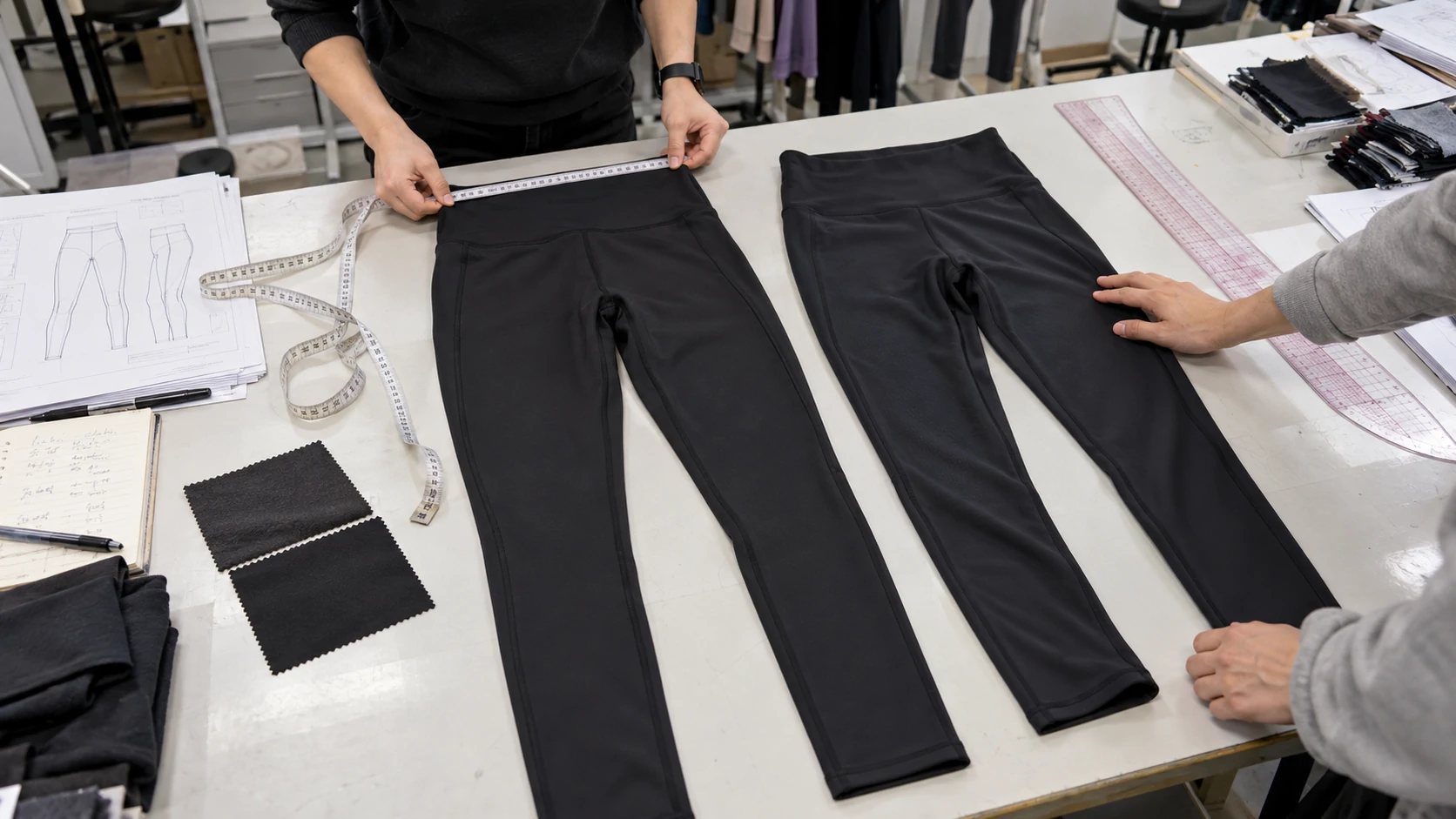
When possible, keep the previously approved sample available during the review.
Compare both garments under similar conditions.
Check:
- finished measurements
- fit on the same body
- waistband position
- compression
- rise
- garment length
- movement
- recovery after wear
Side-by-side comparison makes subtle changes easier to identify.
It also helps determine whether the difference comes from the new fabric or another development variable.
Test Both Samples on the Same Fit Model
Fit comparisons are much more useful when the testing conditions remain consistent.
Using different fit models can introduce another variable.
When possible, compare the original and replacement fabric samples on the same intended body size.
Have the wearer perform the same movements in both garments.
This can include:
- standing
- walking
- sitting
- squatting
- bending
- raising the knees
Then compare how each garment feels and behaves.
The goal is not simply to decide which fabric feels better.
The goal is to determine whether the replacement still delivers the intended product experience.
A Practical Fabric-Switch Checklist
Before approving a new fabric for an existing activewear pattern, compare the key variables.
| Check | What to Compare |
|---|---|
| Composition | Fiber blend and elastomeric content |
| Weight | GSM and overall material substance |
| Width Stretch | Extension across the body |
| Length Stretch | Extension through rise and garment length |
| Recovery | Ability to return after stretching |
| Compression | Resistance against the body |
| Knit Structure | Density and behavior under tension |
| Hand Feel | Softness, firmness and surface character |
| Fit | Overall silhouette and pressure |
| Waistband | Position, compression and stability |
| Movement | Comfort during realistic activity |
| Opacity | Coverage under actual garment tension |
A replacement fabric should be evaluated as part of the finished product, not only as a material specification.
Should You Adjust the Pattern After Switching Fabric?
Sometimes no pattern adjustment is necessary.
If the replacement material behaves very similarly to the approved fabric, the existing pattern may still produce the intended result.
But when the stretch, recovery, compression or structure changes significantly, pattern adjustments may be required.
These could involve areas such as:
- waist
- hip
- thigh
- rise
- length
- waistband dimensions
The correct adjustment depends on how the new fabric behaves in the actual sample.
That is why testing should come before changing measurements blindly.
What Should Be Approved Before Bulk Production?
If the production fabric differs from the material used for the original approved sample, the change should be reviewed before bulk production begins.
At minimum, confirm:
- fabric specification
- color
- stretch and recovery
- finished measurements
- fit
- compression
- movement
- construction
- appearance
The final production reference should reflect the material that will actually be used in bulk.
For a broader approval process, see what you should check before approving a sample.
The Key Takeaway
Changing fabric is not just changing the material.
In fitted activewear, changing fabric can change the fit even when the pattern and finished measurements stay the same.
Stretch, recovery, compression, weight and knit structure all affect how the garment interacts with the body.
That is why a replacement fabric should be evaluated in a finished sample under realistic wear conditions before it is approved for bulk production.
The closer the replacement fabric behaves to the original, the more likely the existing pattern will continue to perform as intended.
Frequently Asked Questions
Why do leggings feel tighter after changing fabric?
The replacement fabric may have less stretch, stronger recovery or greater resistance under tension. This can increase compression even when the garment measurements remain unchanged.
Can two fabrics with the same GSM fit differently?
Yes. GSM measures fabric weight, not stretch, recovery, knit structure or compression. Two fabrics with similar GSM can behave very differently on the body.
Do I need a new sample when changing activewear fabric?
If the replacement fabric has meaningfully different stretch, recovery, weight, structure or compression, producing a new sample is recommended so the final fit can be evaluated.
Why did the rise change even though the pattern stayed the same?
Different lengthwise stretch and fabric resistance can change how the garment distributes tension through the hip, seat and rise once worn.
Should I change the pattern immediately after switching fabric?
Not necessarily. First test the new fabric in a finished sample. Pattern adjustments should be based on the actual fit difference rather than assumptions from the fabric specification alone.