
An approved activewear sample can feel exactly right.
The fabric feels soft.
The compression feels balanced.
The waistband sits correctly.
The stretch and recovery feel right.
Then bulk production arrives — and something feels different.
The garments may look similar and still be within the measurement tolerance, but the hand feel, compression, stretch or overall fit does not feel exactly like the approved sample.
Why?
Because moving from one development sample to bulk production introduces more variables.
Bulk consistency depends on controlling the material, construction, measurements and finishing — not simply copying the appearance of the approved sample.
Why Can Bulk Feel Different From the Approved Sample?
A development sample is usually produced in a very small quantity.
Bulk production may involve hundreds or thousands of garments.
That change in scale introduces variables such as:
- production fabric lots
- fabric relaxation
- cutting
- sewing tension
- measurement tolerance
- finishing
- pressing
- washing
- production handling
Small differences in several areas can combine into a noticeable change in the finished garment.
This does not mean that every small variation is automatically a defect.
The important question is whether bulk production remains within the approved product standard and delivers a consistent wearing experience.
Start With the Production Fabric
When bulk feels different, fabric should be one of the first things to investigate.
The approved sample may have been produced using development yardage, while bulk production uses the final production lot.
Even when the fabric specification is intended to be the same, the production material should still be checked for consistency.
Compare characteristics such as:
- composition
- GSM
- width
- stretch
- recovery
- surface texture
- hand feel
- visual appearance
For fitted activewear, relatively small changes in fabric behavior can affect the way the finished garment feels on the body.
Fabric Lots Can Have Small Variations
Textile production is a manufacturing process.
Different production lots can show small variations in characteristics such as hand feel, shade, weight or performance.
This is why bulk fabric should not be evaluated only by checking the supplier's specification sheet.
Physical comparison is important.
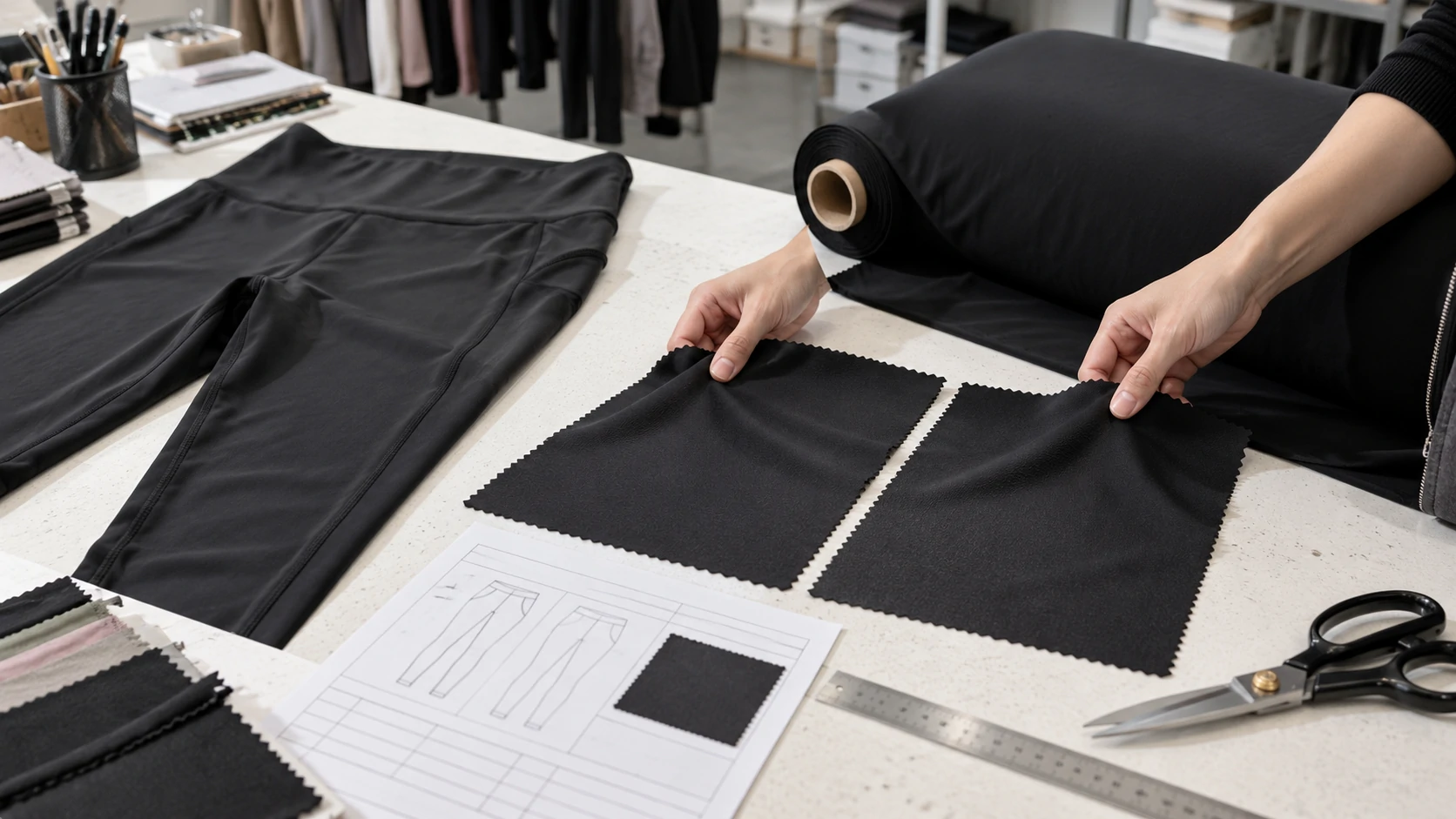
If possible, compare the production fabric directly with the material used for the approved sample.
The goal is to determine whether the bulk material behaves closely enough to maintain the intended product result.
For color-specific differences between sample and production, see why bulk color can look different from the sample.
Stretch and Recovery Can Change the Wearing Experience
For activewear, fabric performance directly affects perceived fit.
If the bulk fabric stretches differently from the approved sample material, the garment can feel:
- tighter
- looser
- more restrictive
- less supportive
- more compressive
Recovery matters as well.
A fabric with stronger recovery may create greater resistance against the body.
A fabric with weaker recovery may feel softer initially but provide less support after movement.
This is why fabric stretch and recovery should be compared before the material enters full production.
For more on this relationship, see how much stretch activewear really needs.
The Same Measurements Can Still Feel Different
This is one of the most important points when investigating bulk consistency.
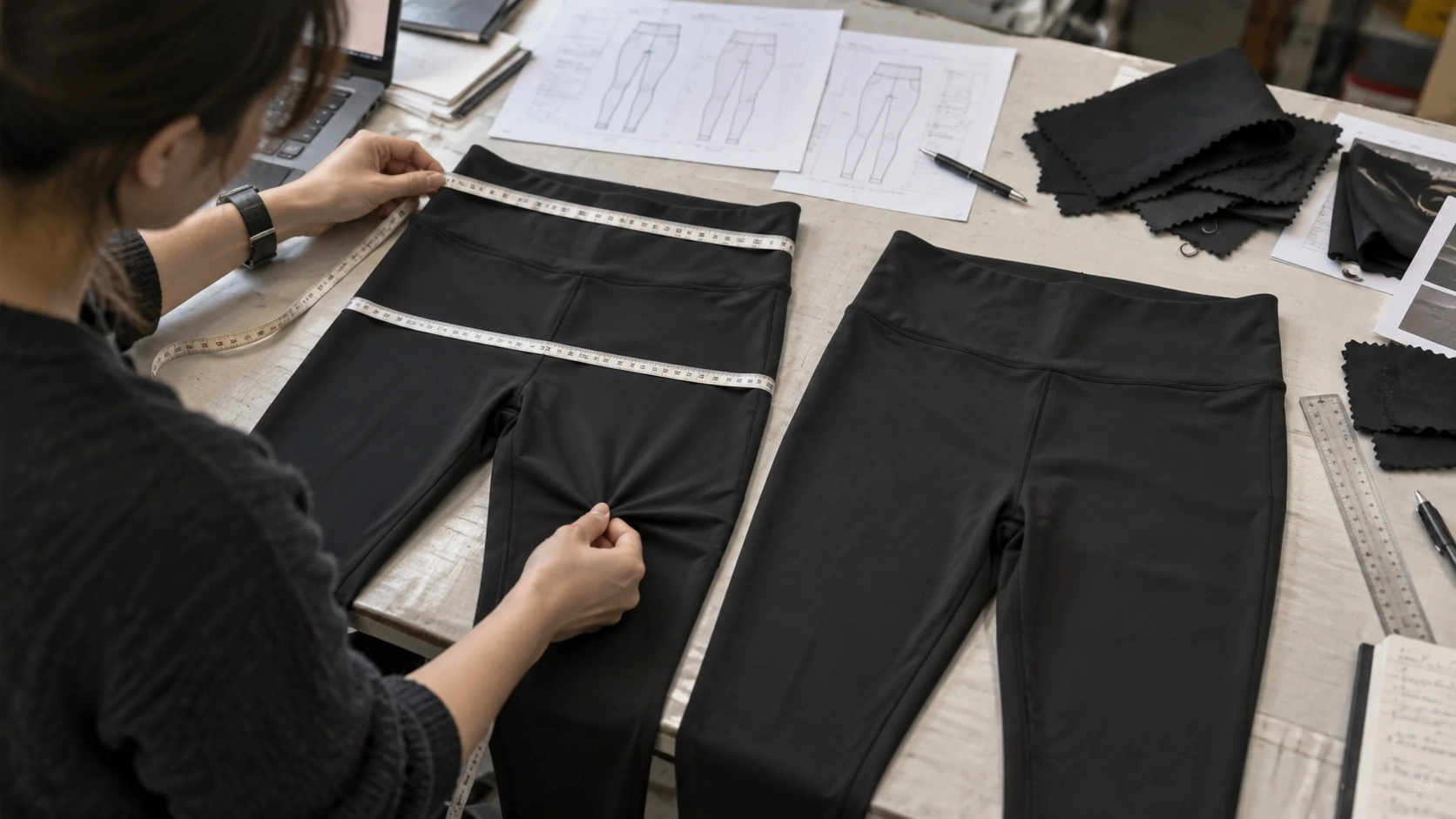
Two garments can have very similar flat measurements and still feel different when worn.
Why?
Because measurements describe dimensions.
They do not fully describe:
- fabric resistance
- stretch
- recovery
- compression
- softness
- structure
A bulk garment can therefore measure within tolerance but create a different wearing experience if the material behaves differently.
This is especially important for leggings, sports bras and compression products.
Fabric Relaxation Before Cutting Matters
Stretch fabrics can change dimensions after being rolled, transported or stored under tension.
Before cutting, the material may need time to relax under appropriate production conditions.
If fabric behavior changes after cutting, it can affect the dimensions and shape of the garment pieces.
This can influence:
- finished measurements
- garment length
- waistband dimensions
- seam alignment
- overall fit
Fabric handling before cutting is therefore part of production consistency.
Cutting Accuracy Affects More Than Appearance
Once the production fabric is approved, cutting accuracy becomes important.
If panels are cut inconsistently, the final garment may not reproduce the approved shape correctly.
In activewear, this can affect areas such as:
- waist
- hip
- rise
- thigh
- inseam
- leg opening
Because the garment is fitted and elastic, small dimensional differences can become more noticeable once worn.
Accurate cutting helps reduce variation before sewing begins.
Sewing Can Change How the Garment Feels
Construction also affects the final wearing experience.
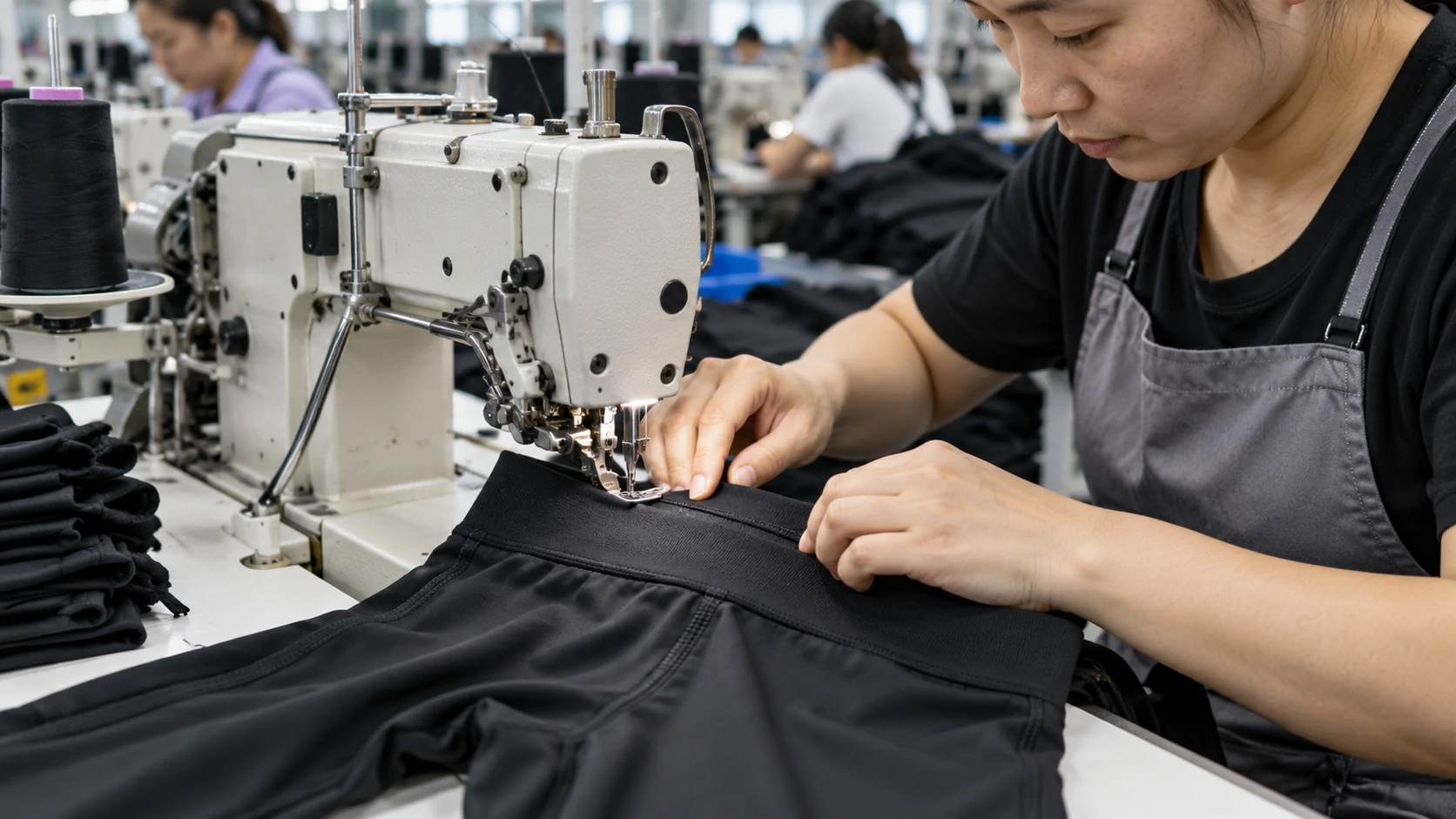
Seam tension, stitch density, elastic application and operator handling can influence how different areas of the garment behave.
For example, excessive tension around a waistband or opening can make an area feel firmer than expected.
Insufficient control may make another area feel less stable.
The bulk garment therefore needs to match not only the approved measurements but also the intended construction.
Elastic Tension Can Create Noticeable Differences
Where elastic is used, application tension becomes another variable.
This can be particularly noticeable in:
- waistbands
- underbust bands
- straps
- openings
If the elastic tension changes between the approved sample and bulk production, the garment may feel significantly tighter or looser even when other measurements appear correct.
Elastic specification and application should therefore be controlled together.
Finishing Can Change Hand Feel
The garment is not necessarily finished when sewing ends.
Depending on the product, later processes may affect how the final garment feels.
These can include:
- washing
- softening
- heat treatment
- steaming
- pressing
- other finishing processes
A finishing change can alter surface feel, softness or garment dimensions.
This is why the bulk product should be evaluated in its final finished condition, not only immediately after sewing.
Heat Can Affect Stretch Fabrics
Activewear commonly contains elastomeric fibers that help provide stretch and recovery.
Excessive or poorly controlled heat during production or finishing can influence fabric behavior.
Processes involving heat should therefore follow suitable settings for the selected material.
This is particularly relevant when using:
- heat transfers
- pressing
- steaming
- drying
- other thermal processes
The purpose is not simply to avoid visible damage.
The material should also maintain the performance expected from the approved sample.
Changing Fabric During Production Requires Re-Evaluation
If the production fabric is changed from the approved sample material, the risk of a different result increases.
A replacement fabric may look very similar but behave differently in stretch, recovery, compression or hand feel.
This is why fabric substitution should not be treated as a simple purchasing decision.
It can affect the entire garment.
For a deeper explanation, see why fit can change after switching fabric.
Compare Bulk Against the Approved Reference
The approved sample should remain an important production reference.
When reviewing bulk, compare representative garments with the approved version.
Check:
- fabric hand feel
- stretch
- recovery
- compression
- measurements
- construction
- waistband behavior
- overall fit
- visual appearance
The goal is not to expect every garment to be microscopically identical.
The goal is to confirm that production remains within the agreed standard.
Do Not Check Only One Bulk Garment
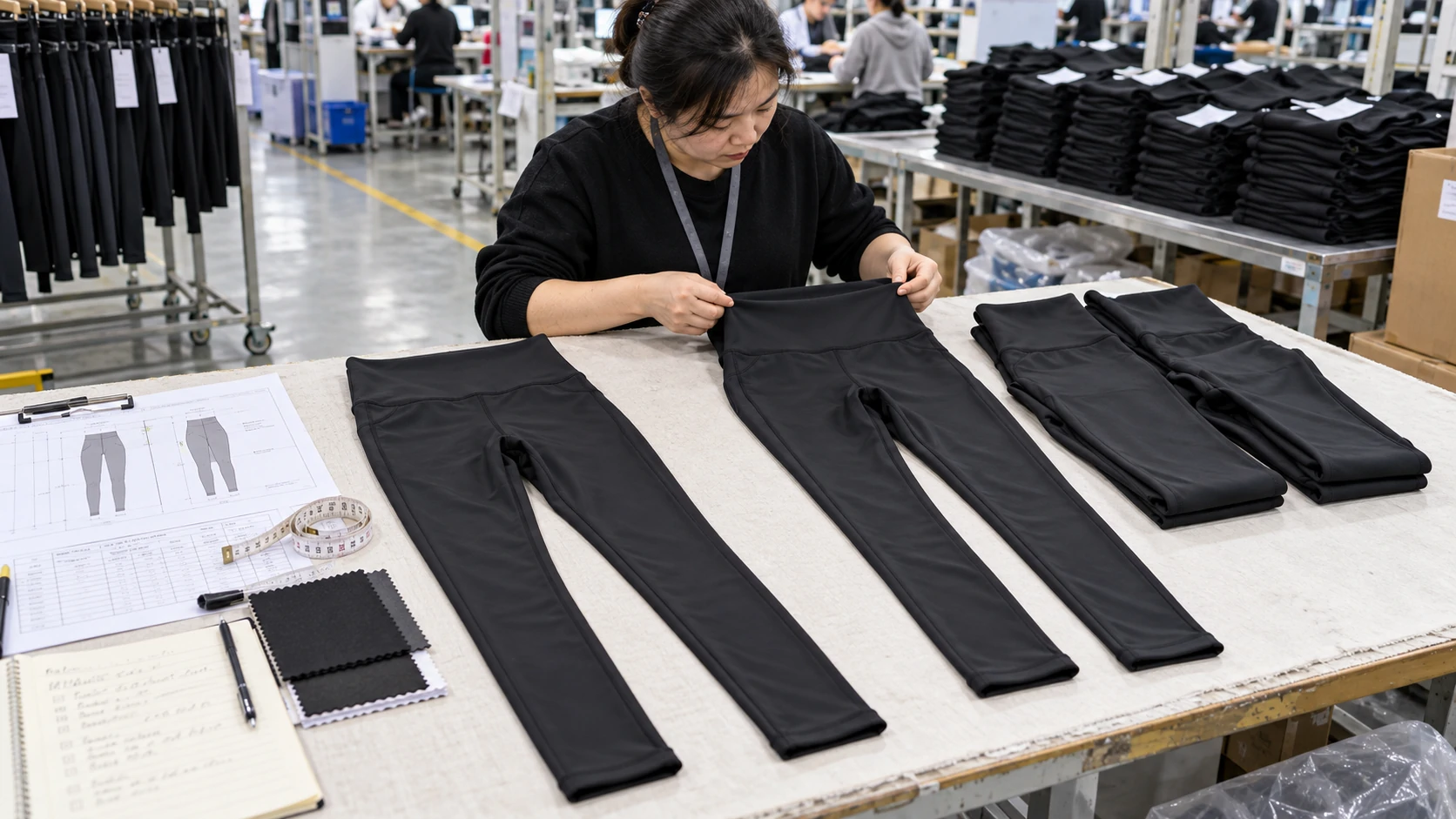
One garment cannot represent an entire production run.
A useful QC process should evaluate pieces from different parts of the production quantity.
This helps identify whether a difference is:
- isolated
- size-specific
- color-specific
- batch-related
- systematic
For example, if one garment feels slightly tighter, it may be an individual variation.
If multiple garments across the production run show the same difference, the cause may be more systematic.
Sampling across bulk provides much more useful information than checking a single piece.
Check Different Sizes
Bulk consistency should also be evaluated across the size range.
A product may perform correctly in one size but reveal a grading or construction issue in another.
Depending on the product and order, review representative sizes for:
- measurements
- proportions
- waistband behavior
- compression
- garment length
- overall fit
This becomes especially important when a style has a broad size range.
Check Different Colors When Necessary
Different colorways can sometimes involve different fabric lots or processing conditions.
If a style is produced in multiple colors, it can be useful to compare representative garments across those colors rather than assuming one color represents the entire order.
Check whether the different colorways maintain comparable:
- hand feel
- stretch
- recovery
- measurements
- construction
- fit
If the physical behavior differs, investigate before shipment.
Use the Approved Sample as a Standard, Not Just a Photo
Photos are useful for visual reference.
But they cannot reproduce hand feel, stretch, recovery or compression.
For products where these characteristics are important, a physical approved sample provides a much stronger reference.
It allows the production and QC teams to compare the actual garment against the intended result.
This is one reason sample approval should be completed carefully before bulk production begins.
For the broader approval process, see what you should check before approving a sample.
A Practical Sample-to-Bulk Consistency Checklist
Before approving bulk activewear, compare the main variables with the approved reference.
| Check | What to Compare |
|---|---|
| Fabric | Production material vs approved sample material |
| GSM | Weight and material substance |
| Stretch | Widthwise and lengthwise behavior |
| Recovery | Return after extension |
| Hand Feel | Softness, firmness and surface character |
| Cutting | Panel dimensions and consistency |
| Measurements | Finished garment specifications and tolerances |
| Sewing | Seam construction and tension |
| Elastic | Specification and application tension |
| Finishing | Final hand feel and dimensions |
| Compression | Wearing pressure and support |
| Fit | Overall fit on the intended body |
| Sizes | Consistency across representative sizes |
| Colors | Consistency across relevant colorways |
| QC Sampling | Representative pieces from bulk production |
The final decision should consider the garment as a complete product.
What If Bulk Is Within Tolerance but Still Feels Different?
This is where measurement data and physical evaluation need to work together.
If the garment measurements are within the agreed tolerance but the product consistently feels different, investigate other variables.
Start with:
- fabric stretch
- recovery
- GSM
- hand feel
- elastic tension
- finishing
- construction
Do not immediately change the pattern simply because the garment feels different.
First identify which variable changed.
Otherwise, adjusting the pattern may create a second problem without solving the first one.
Can Bulk Be 100% Identical to One Sample?
Manufacturing always involves tolerances.
Expecting every garment to be physically indistinguishable from one development sample is not a realistic production standard.
The objective is controlled consistency.
That means defining acceptable standards for:
- material
- measurements
- construction
- appearance
- performance
and then controlling production against those standards.
A strong manufacturing process reduces unnecessary variation and identifies meaningful deviations before shipment.
What Should Happen If a Difference Is Found?
First determine whether the difference is isolated or systematic.
Then identify the likely source.
For example:
If the hand feel changed:
Compare the fabric lot and finishing.
If compression changed:
Check fabric stretch, recovery, measurements and elastic tension.
If the fit changed:
Review material behavior, cutting, measurements and construction.
If only one size changed:
Check grading, cutting and size-specific measurements.
The solution should address the cause rather than simply compensate for the symptom.
The Key Takeaway
When bulk feels different from the approved sample, there is rarely only one possible explanation.
Fabric, stretch, recovery, cutting, sewing, elastic tension, finishing and measurement variation can all influence the final product.
The approved sample gives production a target.
But achieving consistent bulk requires controlling the variables that created that target in the first place.
For activewear brands, the most useful approach is to compare production material and representative finished garments against the approved reference before shipment — not simply assume that matching flat measurements guarantees the same product experience.
Frequently Asked Questions
Why does bulk activewear feel tighter than the approved sample?
Possible causes include differences in fabric stretch or recovery, finished measurements, elastic tension, construction or finishing. Compare these variables with the approved sample before changing the pattern.
Can bulk garments measure correctly but still feel different?
Yes. Flat measurements do not fully describe stretch, recovery, compression or hand feel. Two garments can measure similarly and still create different wearing experiences.
Should the production fabric be compared with the sample fabric?
Yes. For fitted activewear, comparing production material with the approved sample material can help identify changes in stretch, recovery, GSM, surface and hand feel before full production.
How should bulk consistency be checked?
Compare representative garments from different parts of the production run with the approved sample. Review fabric, measurements, construction, compression, finishing and overall fit.
Is some variation normal in bulk production?
Manufacturing involves defined tolerances. The goal is not microscopic uniformity but controlled consistency within the approved material, measurement, construction and performance standards.